 Bulky Buddy
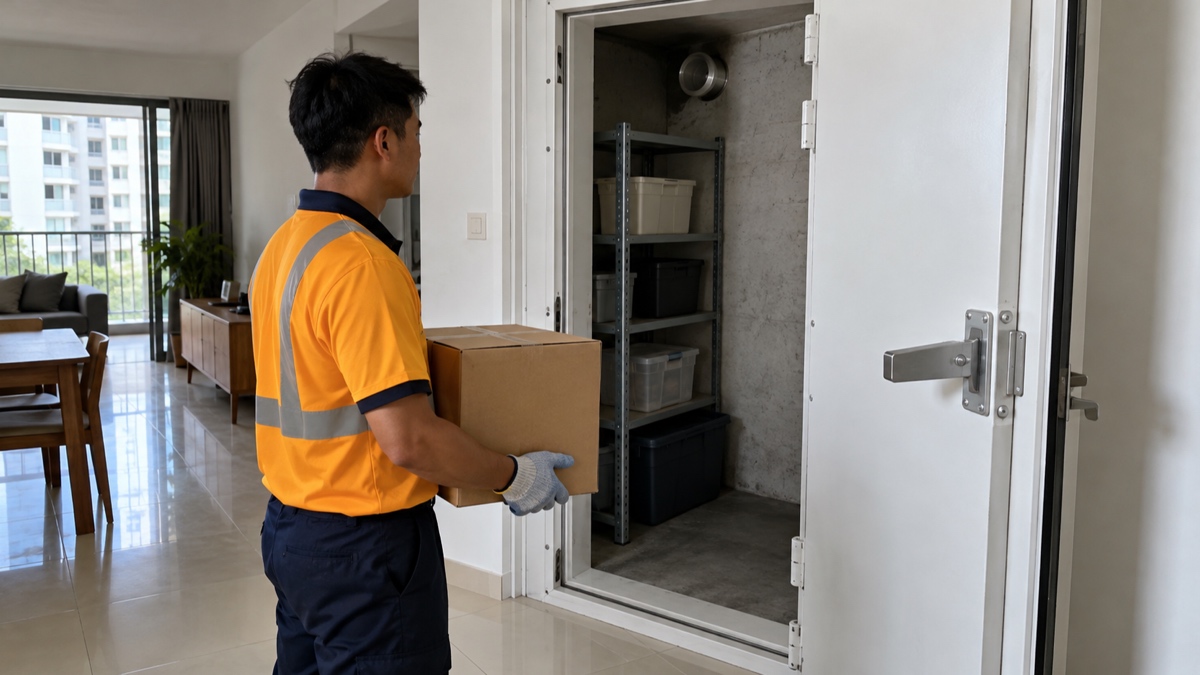
The household shelter started with a suitcase and a spare fan. Now you have to move three boxes to reach the suitcase, and nobody remembers what is behind the fan. Clearing it is less about finding one enormous item and more about getting a lot of small decisions out of a very tight space.
We collect bagged general household junk and unwanted loose furniture, including the clutter you sort out of a storeroom. Send photos on WhatsApp for a fixed, all-in quote. For an HDB household shelter, the job is clearing belongings while protecting the door and structure. It is not an invitation to alter the shelter.
Show us the shelter doorway and the loose items you want removed for a fixed, all-in quote.
Get my price on WhatsAppRemember what the household shelter is for
HDB describes the household shelter as a civil-defence shelter with a steel door and strengthened walls, floor and ceiling for protection in a war emergency. An ordinary store cupboard and a household shelter may both hold boxes, but they are not the same structure.
MHA explains that shelters must remain usable during emergencies and cannot have permanent fixtures. Keep storage removable and the door usable. Clearing loose possessions does not authorise hacking, drilling, removing the door or changing ventilation components.
If your plans involve alterations, follow the applicable official guidelines for that work. This guide is about taking clutter out. It does not set shelf specifications or tell you how to modify the shelter. The easiest useful improvement may simply be making the floor visible again.
Open a working area inside the flat
Choose a clear patch of floor outside the shelter, still inside your home, where you can examine one box at a time. Keep it away from the steel door’s swing and the route to your front door. Move your keep-pile to another part of the flat so it cannot blend into the outgoing bags.
In a Punggol flat where the shelter opens beside the dining area, that may mean shifting a dining chair temporarily and using the table for small items. It does not mean lining the common corridor with cartons. Keep the household’s route between rooms usable while you work.
Take a wide photo of the shelter entrance before moving anything. Photograph the shelves and visible contents too. These pictures help you compare what remains and give us context for access. You can send a clearer final inventory after sorting.
Work from the doorway, one manageable group at a time
Start with loose items you can reach safely. Bring out one manageable box, decide where its contents go, then move on. Don’t pull an unseen item from the bottom of a crowded pile or climb on stacked cartons to reach the top shelf. Leave heavy or awkward pieces in place for assessment.
Check bags rather than relying on their appearance. A bag of old school uniforms and a bag of spare bedding can look identical. Open boxes marked “miscellaneous” and make a real decision about the contents. That label has already postponed the decision once.
Keep important papers, keys and personal keepsakes in a separate tray as you find them. For boxes belonging to someone else in the household, let that person decide. Emptying the room is not the same as obtaining permission to throw everything away.
Sort keep, reuse and disposal into separate places
Keep the things you still use and can store accessibly. Offer useful unwanted possessions for reuse with condition photos and a collection date. For unusable ordinary household clutter, use sound bags or sturdy boxes and include them in the disposal inventory.
NEA lists reuse and repair channels for suitable items. If you uncover a small cabinet or usable chair, our old-furniture guide helps with that choice. A recipient still needs to accept the item; don’t count an unanswered message as a completed donation.
Say a Sengkang household has kept every empty appliance carton since moving in. Separate suitable clean cardboard for recycling, then assess the actual appliances through the e-waste route. A box and the device it once held need not go to the same place.
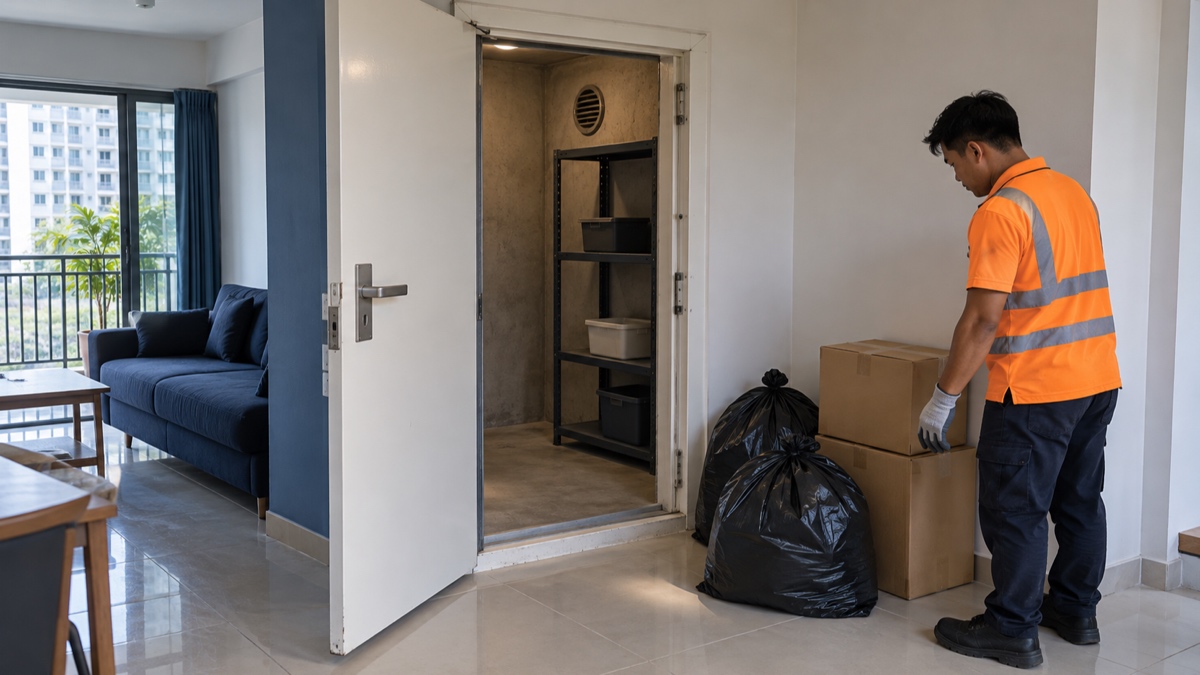
Bagged junk is fine; hidden hazards are not
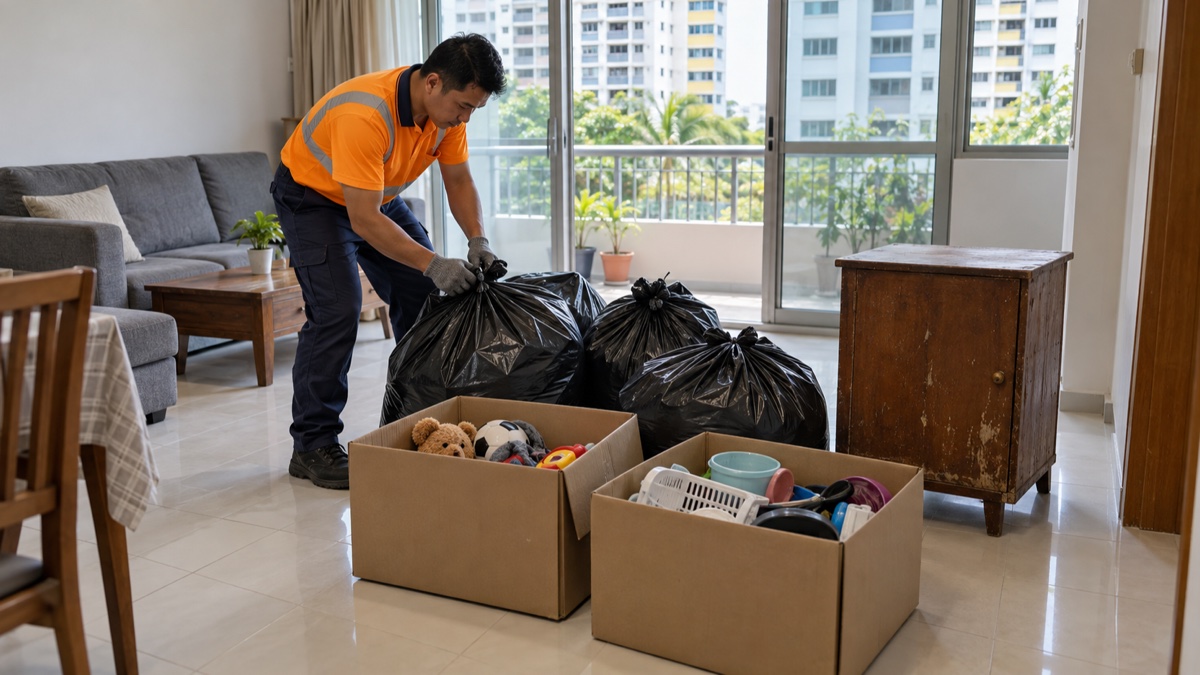
You can book collection for bags and boxes of ordinary household clutter even if no furniture is going. Old clothes, unwanted toys and miscellaneous dry possessions can form the whole load. Tell us what they are, how many bags or cartons you have and their approximate size.
Keep electrical items and batteries separate. Recycle Right excludes e-waste, furniture, clothes and toys from blue bins, so that bin is not a shortcut for the mixed pile. See our household-junk removal guide for the full sorting routes.
We do not take renovation debris, paint, chemicals, gas cylinders or loose batteries in this load. The same guide links to contractor, manufacturer, supplier and NEA advice for those items. If you find an unidentifiable container behind the shelving, keep it out of the household bags and seek appropriate disposal advice.
Protect the doorway and leave the heavy work for assessment
A tall rack can be awkward at a narrow opening even when it looked small inside. Show its full height and width, the doorway and the turn into the living area. Explain whether it is free-standing or fixed. Do not unscrew fixtures from the shelter walls as part of a casual clearout.
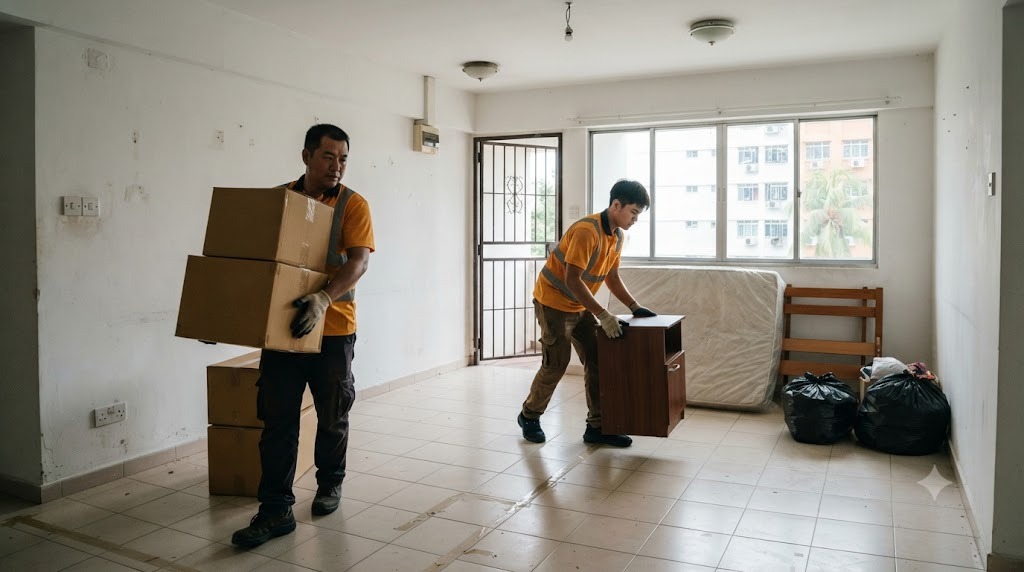
Handle manageable boxes without dragging their corners against the frame, door or walls. Keep the floor clear of loose objects that could catch underfoot. Heavy shelving or a bulky cabinet needs a planned route; don’t force it through the opening to save a few minutes.
If the door will not operate normally or you notice a displaced seal, stop treating it as a packing obstacle. HDB’s household-shelter care guidance addresses door and gasket issues. Use the appropriate maintenance route rather than forcing or altering the door for a collection.
Boxes sorted and the keep-pile separate? Send photos and the final count for your collection quote.
Get my price on WhatsAppFinish the inventory, then plan the carrying route
Once the sorting is done, count the bags and boxes and photograph any loose furniture. Show the shelter opening, the route through your flat, entrance steps and lift access. In a flat with a tight turn past the kitchen, include that turn rather than sending only a close-up of the outgoing cabinet.
Keep the load inside while awaiting collection. Label retained boxes clearly and have one household member walk the crew through the agreed items. If you add the spare-bedroom clutter later, send updated photos so the fixed quote covers the final load. For several rooms at once, use our whole-home clearance guide.
Put back only what you can reach and remove
After the loose clutter has gone, review what you are putting back. Group items by use, make the contents visible with simple labels, and avoid burying everyday essentials behind rarely used boxes. Leave access to the door and keep its swing clear.
Take a final photo of the organised space for your own reference. This is a practical storage reset, not a certification that the shelter meets every technical requirement. Keep any proposed fixtures or alterations separate from the clearout and refer them to the official guidance. You can enjoy the reclaimed space without turning it into a building project.