 Bulky Buddy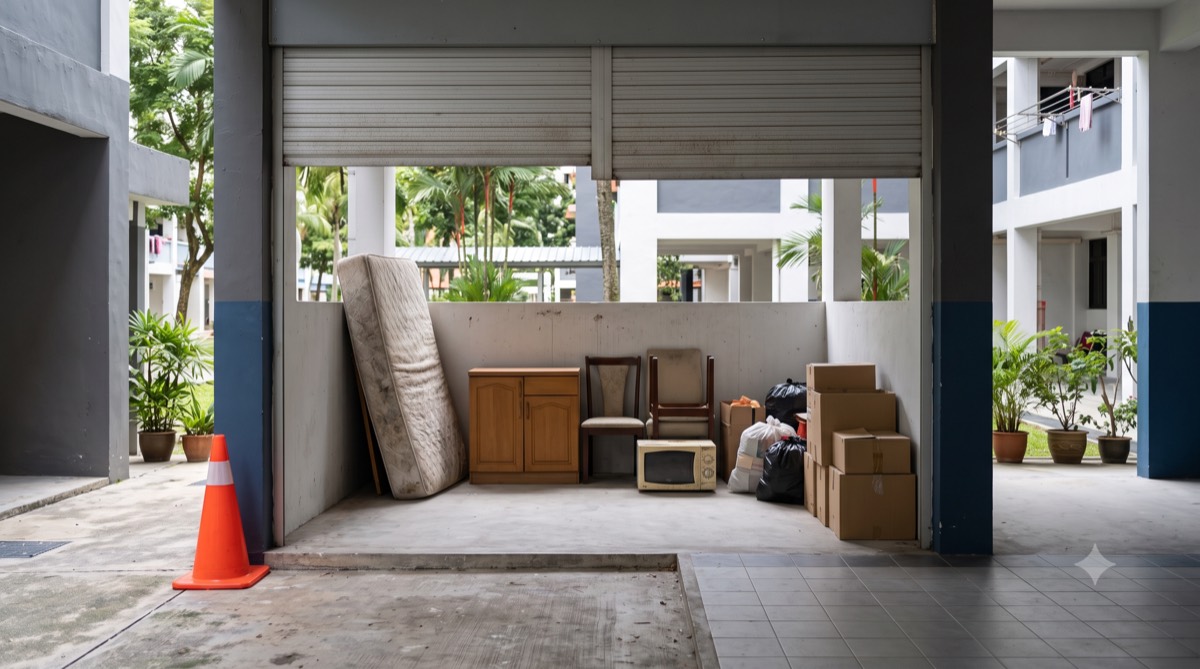
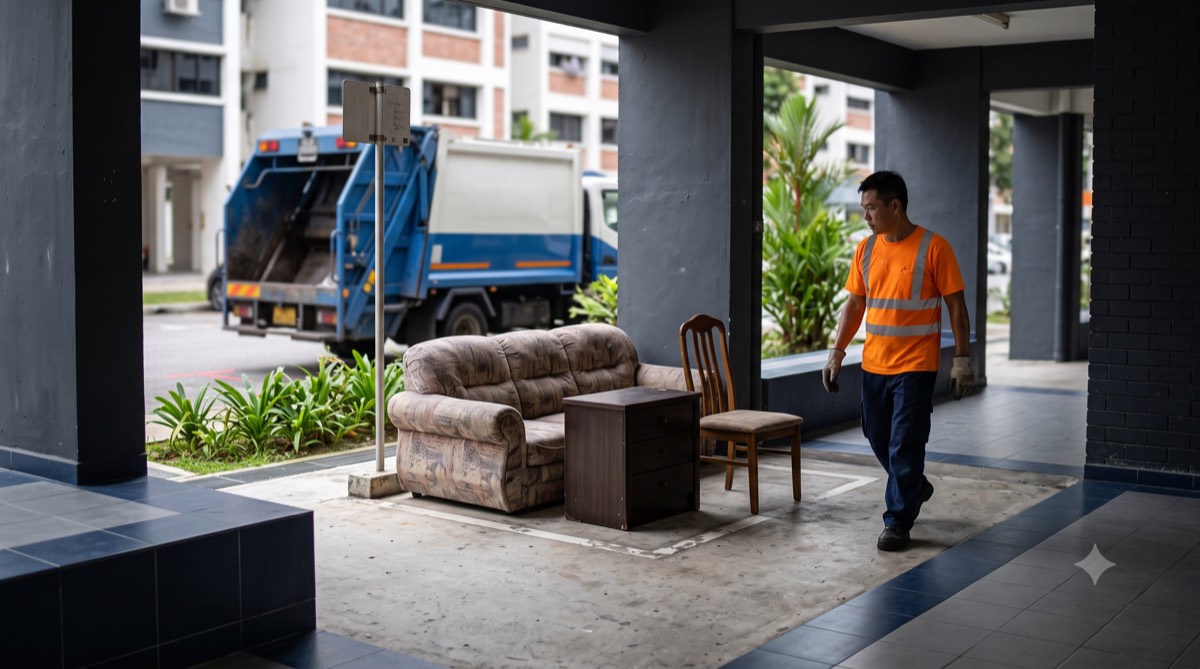
Here's the thing most people get wrong about throwing out big stuff in Singapore: the common corridor and the void deck are not a free-for-all. Leave an old cabinet "for someone to take" and you're not being generous — you're illegally dumping, and NEA takes that seriously. Before you shift a single heavy item, it's worth ten minutes to understand what the rules actually are.
This is a plain-English rundown of how bulky waste, furniture, appliances and e-waste are meant to be disposed of under NEA and HDB rules — and how to stay well clear of a fine. (Rules and processes can change; always check the current NEA and your town council's guidance for specifics.)
Don't want to think about any of this? Let a licensed crew handle it — get a fixed price.
Get my priceThe one rule that matters most: don't dump
The single biggest mistake is treating shared spaces as a dumping ground. Under NEA rules, placing bulky items in common areas without an arranged collection is illegal dumping, and it's an offence. That covers:
- Void decks and pillars
- Common corridors and staircase landings
- Bin centres and refuse chute rooms (dumping bulky items there, not just using them)
- Grass verges, back lanes and open areas
There's a fire-safety angle too: HDB common corridors must stay clear of obstructions so people can evacuate. A wardrobe parked in the corridor isn't just an NEA problem — it can draw an SCDF issue as well. The safe rule is simple: nothing goes into a common area until a collection is arranged for it.
What counts as "bulky waste"?
Bulky waste is basically anything too big to go down the rubbish chute or into a normal bin. In a typical HDB flat that means:
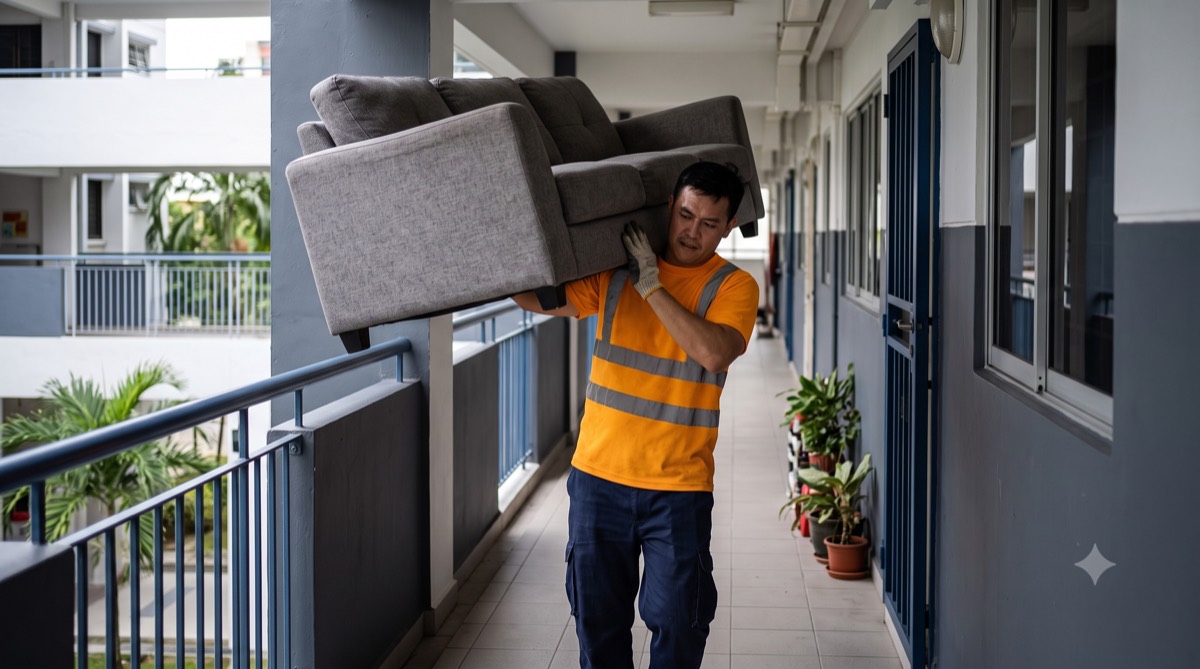
- Sofas and seating — armchairs, 2- and 3-seaters, L-shapes, sofa beds
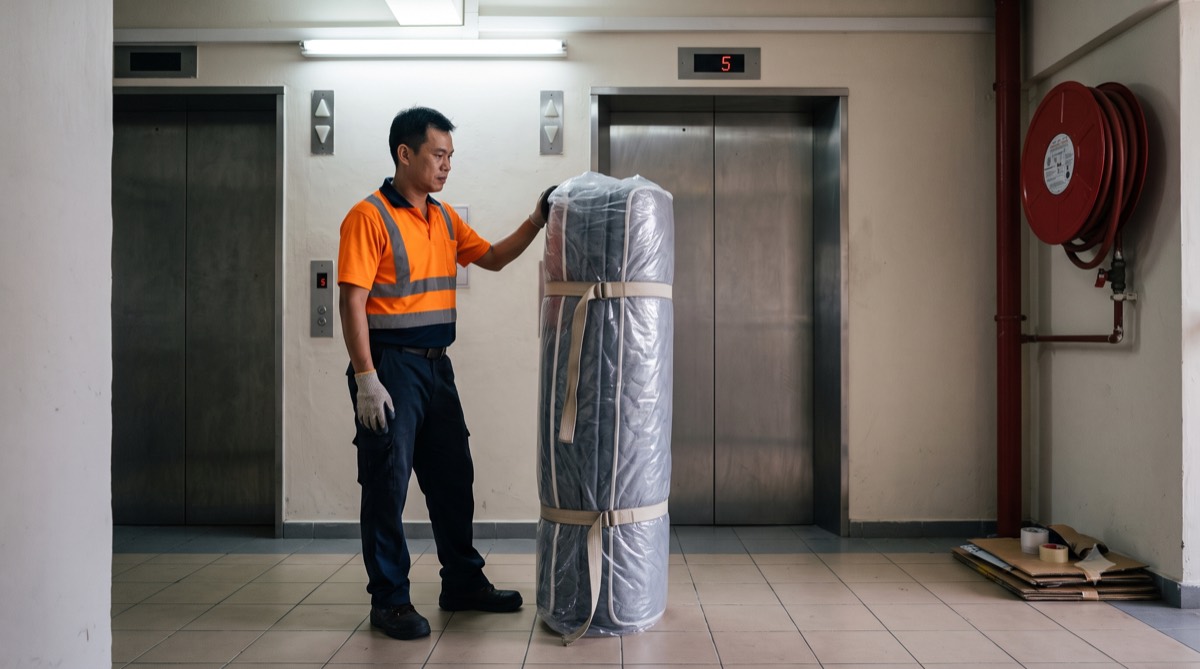
- Mattresses and bed frames — single through king, divans, headboards
- Wardrobes and cabinets — including chests of drawers, bookshelves, TV consoles, shoe cabinets
- Tables and desks — dining, coffee, study, marble-top
- Chairs — dining chairs, office chairs, accent chairs
These go through bulky-item removal — either your town council's service or a private disposer. What they do not do is go down the chute or get left in the open.
Appliances and e-waste: a different channel
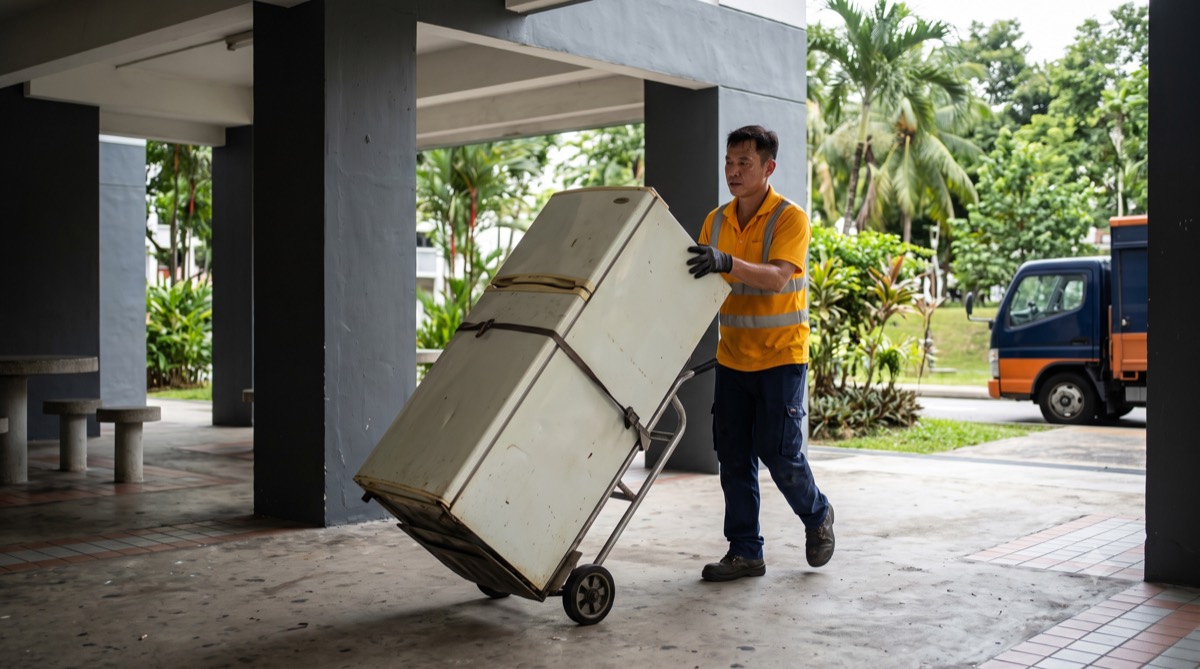
This is where a lot of people slip up. Large electrical and electronic items are regulated e-waste and are handled under Singapore's Extended Producer Responsibility (EPR) scheme — not the general refuse stream. That includes:
- Refrigerators
- Washing machines and dryers
- Televisions
- Air-conditioner units
Under EPR, there are proper routes for these: retailer take-back when you buy a replacement (often available on delivery), designated e-waste collection points, and licensed recyclers. The point is that a fridge shouldn't just be shoved out with the furniture — it has a correct channel, and a licensed disposer routes it there.
Aircon is its own animal. Removing a wall-mounted split unit involves refrigerant handling and electrical work, which is typically an aircon technician's job, not a straight furniture haul. Sort the removal first, then the disposal of the unit itself follows the e-waste route.
Renovation debris is NOT bulky waste
Worth flagging because it trips up a lot of people mid-reno: renovation debris — hacked tiles, old cabinetry ripped out by a contractor, cement, timber offcuts — is construction waste, and it's the renovation contractor's responsibility to cart away and dispose of properly. It doesn't go out with your household bulky items, and it definitely doesn't get left at the void deck. Make debris removal part of your reno contract from the start.
Ready to book? Use the town council removal directory. For reuse, appliances and private-estate collection, start with our bulky-item disposal options guide.
The legit routes, in order
So how should you get rid of the big stuff? Three proper paths:
- Town council bulky-item removal — request a collection, place items where they tell you, work to their schedule and item cap. Best for one or two easy pieces. We compare this in detail in town council vs private disposal.
- Retailer take-back / e-waste channels — for appliances and regulated e-waste, especially when buying a replacement.
- Licensed private disposal — a crew collects from your unit, does the carry and dismantling, and disposes through licensed facilities. Best for heavy items, walk-ups, whole-flat clear-outs or anything on a deadline.
Fridge, sofa and a wardrobe all going? We'll route each correctly and quote it in one go.
Get my priceDo it right, avoid the fine
The rules aren't complicated once you know them: furniture goes through bulky-item removal, e-waste goes through the EPR channels, reno debris is the contractor's job, and nothing gets left in a common area without a booked collection. Follow that and you'll never be the flat that ends up in a "caught illegal dumping" news photo.
If sorting the right channel for a fridge here and a sofa there sounds like a headache, that's exactly what a licensed disposer is for — we take responsibility for routing everything correctly, so you don't have to think about which item goes where. Practical next reads: how to dispose of a mattress in an HDB flat and what actually drives sofa disposal cost. Or just head to the home page and send us a photo of the pile.