 Bulky Buddy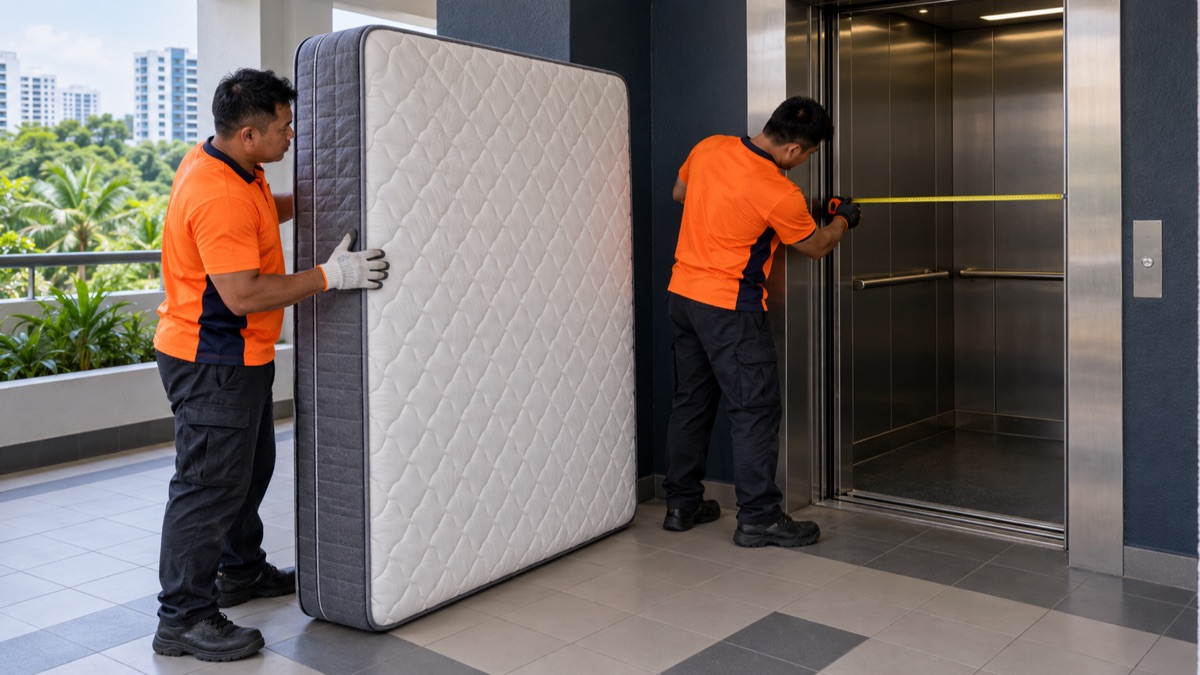
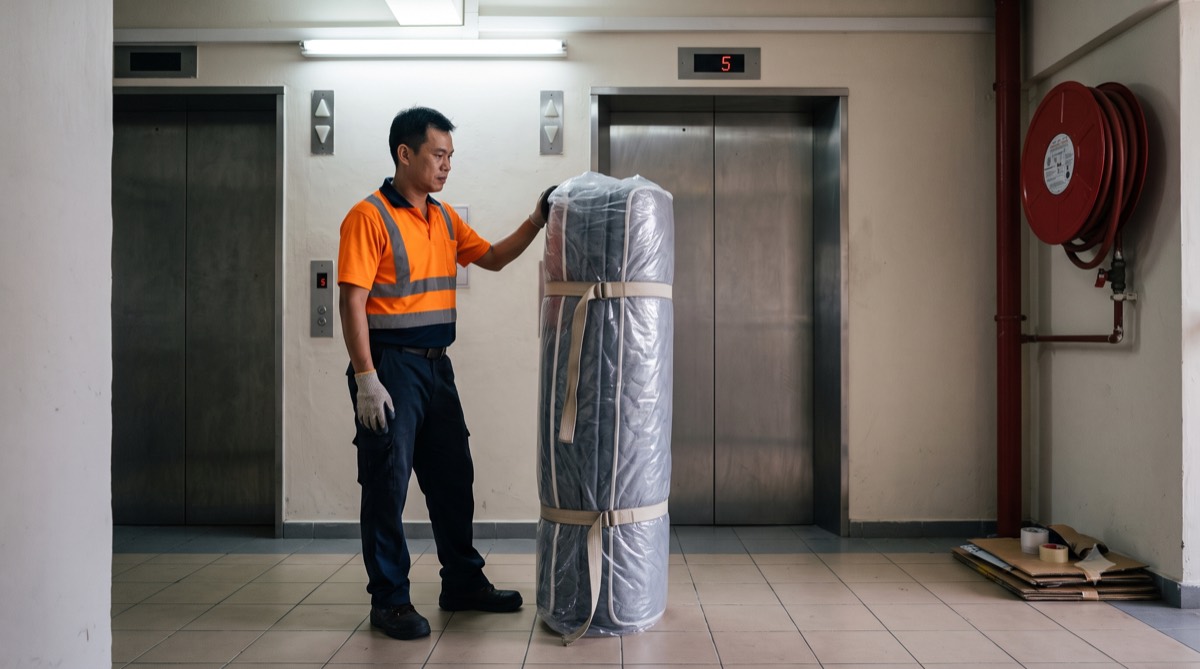
A king mattress is easy to buy. Getting it back out of the flat takes a bit more thought. The bedroom door, the turn into the corridor and the lift entrance all matter — especially if it arrived rolled in a box.
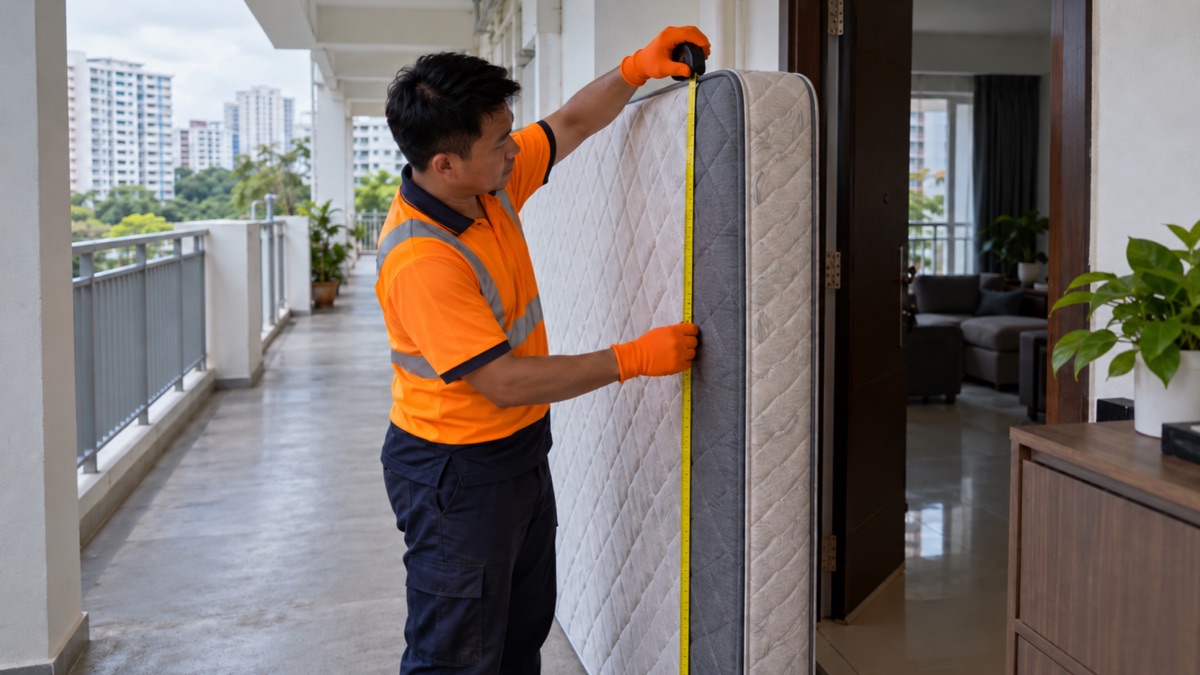
Before collection day, measure the mattress and walk the route to the pickup point. Send the dimensions, model and a few photos with your mattress disposal request. The crew can then work out the carry and tell you whether stairs need to be part of the job.
Got the photos? Send them with your floor and lift access for a fixed quote.
Get my priceSingapore mattress sizes: start here
Sealy Singapore's size guide lists these local sizes. Use them to get your bearings, then put a tape measure on the mattress itself. Imported, custom and longer models can differ.
| Mattress | Reference width × length |
|---|---|
| Single | 91 × 190 cm |
| Super single | 107 × 190 cm |
| Queen | 152 × 190 cm |
| King | 183 × 190 cm |
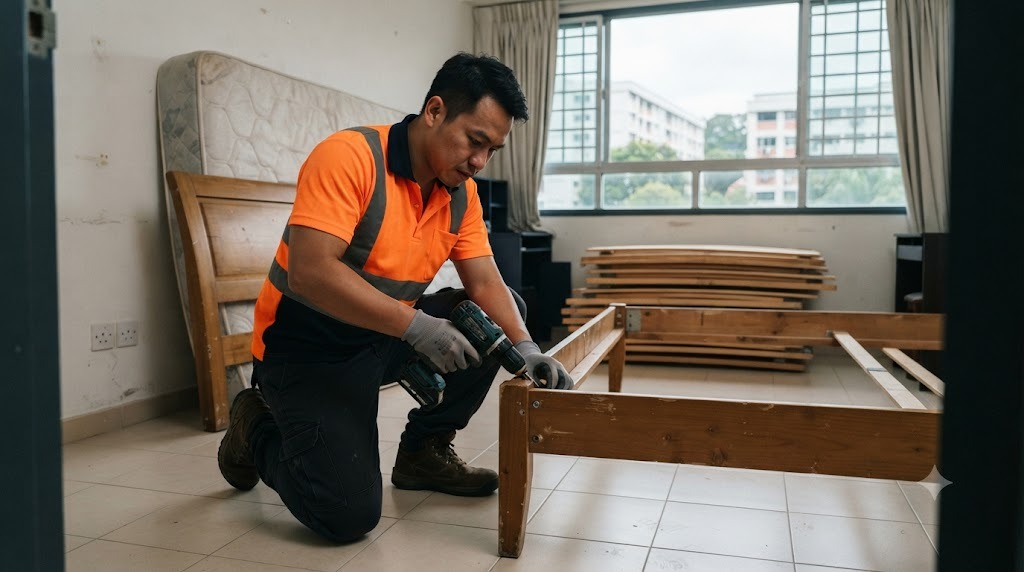
Write down the thickness too, including any cover used for the move. A super single is narrower than a queen, but both still need room to turn out of the bedroom. For a bed frame going in the same trip, measure its largest section after dismantling. The mattress and the base are two separate pieces to get through the door.
Measure your lift, including the entrance
Check the lift serving your floor. Measure its clear door opening and the usable space inside. If access is unclear, ask the town council or building manager about that particular lift.
The floor diagonal helps, but the mattress still has to get through the entrance. It has thickness, and the crew needs room to tilt and turn it. Check the doorway first, then the car. Leave room for the load and crew to stand clear of the closing doors.
If the lift has a stretcher or bulky-item compartment, ask the building contact whether it can be used for this job and who opens it. Leave lift panels to the authorised person. Send the arrangement to the collector with the rest of your access details.
Six measurements to send the crew
- The mattress: width, length, thickness and model. Photograph the whole item and its label.
- The bedroom exit: clear door width and height, plus the space opposite the door for turning.
- The main door and gate: measure the opening with both open.
- The corridor: show corners, railings and narrow sections between the flat and lift.
- The lift: door width and height, then usable car width, depth and height.
- The ground-floor exit: show steps, gates and tight passages on the way to the pickup point.
Label each measurement. “Bedroom door” and “lift door” are much more useful than two unexplained numbers in a WhatsApp message. Keep everything in the same unit. A wide photo showing the turn helps the crew read the measurements properly.
Take measurements while the route is clear. Keep lift doors and other residents' access free; ask the building contact for help if the area is busy or restricted.
Stuck halfway is too late to plan. Get the route checked before carrying the mattress out. If it needs forced bending, wedged lift doors or building fittings removed, stop and get a different plan.
Memory foam, pocket spring and latex
The model's care instructions decide how much flex is allowed. TEMPUR's care advice describes limited flexing for moving its mattresses, with a warning about the direction. Sealy's care guide warns against bending that could damage the innerspring unit.
For memory foam mattress collection, send the brand and model. For pocket-spring or hybrid mattresses, include the construction and handling instructions. For latex, ask the supplier how to support it during the carry, whether folding is allowed and whether separate layers can be handled individually. Keep the mattress intact until you have that answer.
Check the manufacturer's weight information too. Foam or latex does not automatically mean heavier than springs, and a soft mattress is not automatically easy to control. Tell the collector if you struggle to handle it. That matters when planning the crew and the stairs.
It came in a box. Can it go back in one?
Plan around the mattress as it stands today, fully expanded. Ask the maker whether that model can be rolled or compressed again, and what equipment it needs. Until then, give the collector its full dimensions.
If the new mattress delivery and old mattress collection share a day, show both teams the route. The new box and the old mattress may need different handling. Agree who uses the lift first and keep the old mattress inside until its collection is ready.
Item list, photos, floor and lift access — get the whole job quoted before booking.
Get my priceWhen stairs are the fallback
Send photos of the staircase before booking a stair carry. Include your floor, the number of stair sections, clear widths, landing shapes and overhead restrictions. Photograph the turns as well as the straight flights. The crew needs to see where the mattress changes direction.
Get the route and handling agreed before collection day. If neither the lift nor stairs offers a safe way out, keep the mattress inside and arrange an assessment. Lowering it over a balcony or cutting it open in a shared space is not a collection plan.
Get the whole job into one message
Send mattress photos, actual dimensions, model, floor, lift measurements, tight-turn photos and your preferred date. Add the bed frame or divan base if it is leaving too. Say what is already dismantled and whether the mattress is for reuse or disposal.
Considering council collection? Use the town-council booking directory and check acceptance and placement instructions. For private collection, send the same photos and access details for a fixed quote. A clear item list gets the real job priced before anyone starts carrying.