 Bulky Buddy
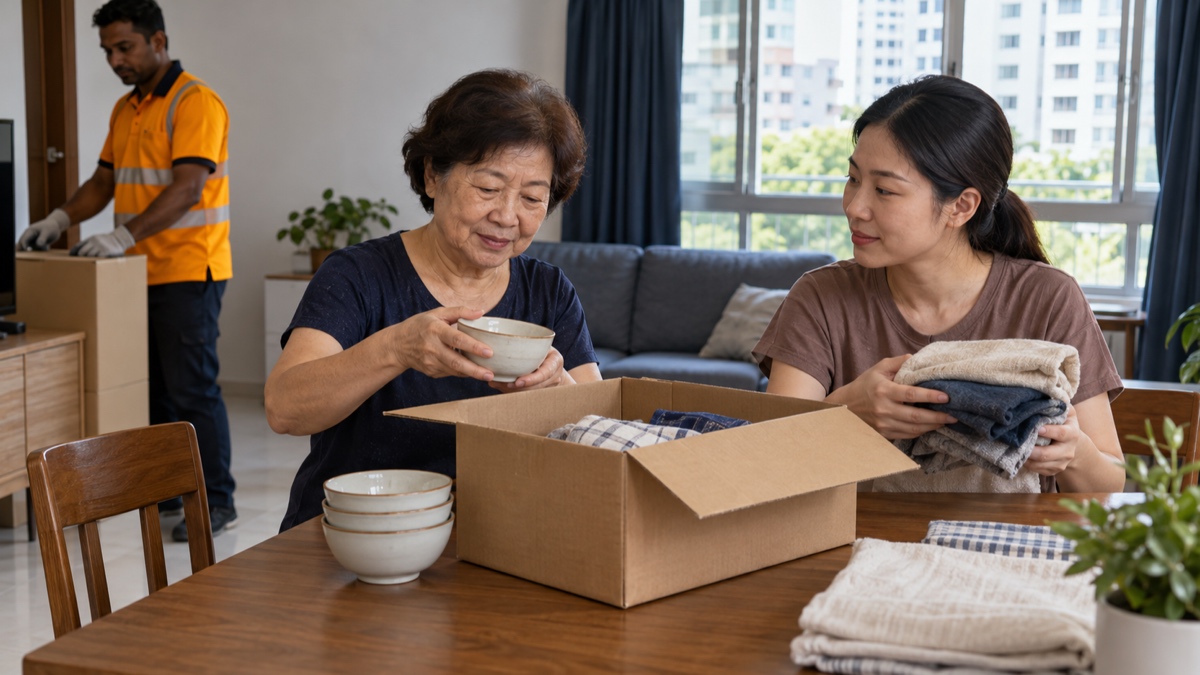
Your parents are moving to a smaller flat. They may be looking forward to it and still want time to decide what comes with them. The dining table, the bowls used every weekend, the cabinet beside Dad’s chair: these are their belongings, and the decisions should stay theirs.
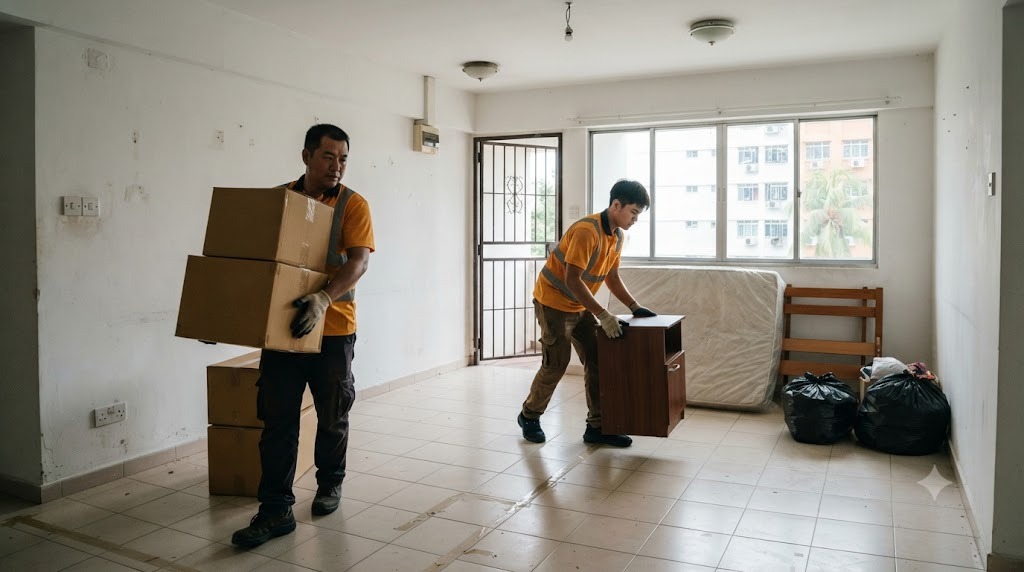
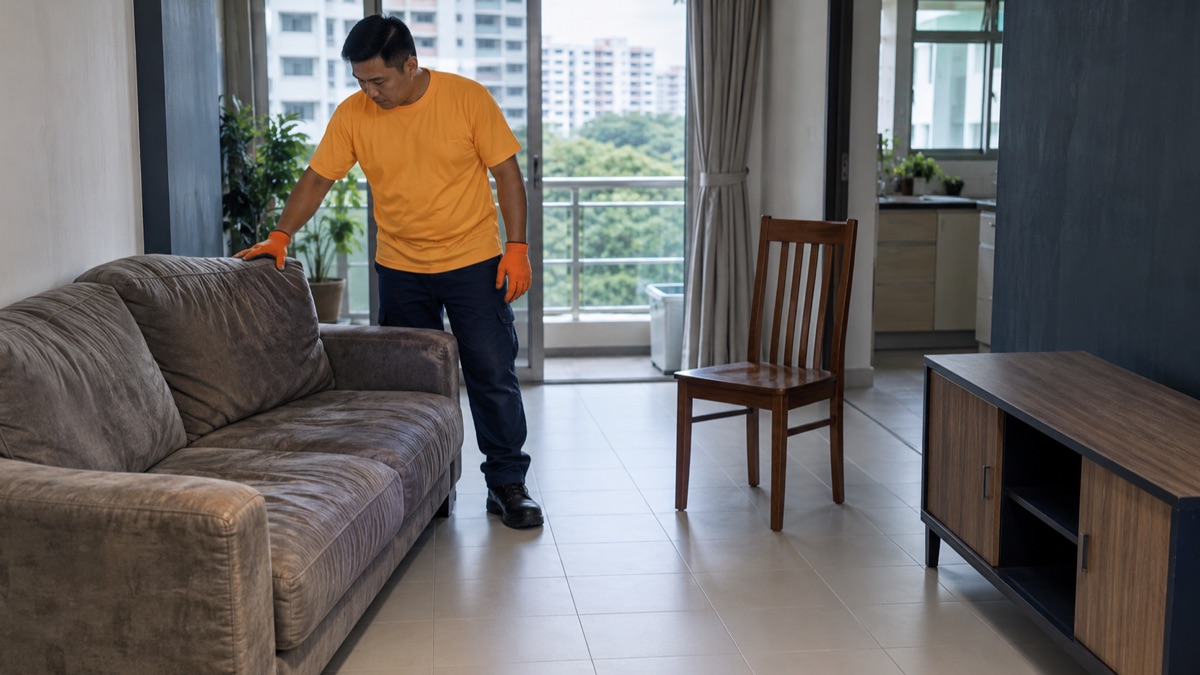
Your role can be practical. Measure the new home, make the options clear, arrange collections and take the unwanted things off their hands once they are ready. Bulky Buddy handles disposal of unwanted furniture and bagged household clutter. We do not move the belongings your parents are keeping to their new home.
When your parents have chosen what can go, send us photos for a fixed, all-in disposal quote.
Get my price on WhatsAppStart with the home they want to live in
Talk about an ordinary day in the new flat. Where will they have breakfast? Which chair do they like reading in? Do they want space for grandchildren to visit, or a familiar cabinet near the dining area? These questions help you build a keep-list around what they use and enjoy.
Try “Which pieces would you most like to take?” rather than opening with a disposal deadline. Write their choices down and revisit the list together. A decision can change while you are planning; the important part is making sure everyone works from the same current list.
Keep the task focused on this move. You do not need to settle every family possession in one weekend. If an item needs more thought, give it a named place in the plan instead of quietly adding it to a rubbish bag.
Measure the new flat before choosing the furniture
Bring a tape measure and sketch the main rooms. Record the usable wall lengths, door openings and the space needed to walk around furniture. Measure the actual pieces your parents want to keep, including handles or parts that project. A floor-plan label alone will not tell you whether their dining set works comfortably.
Say they are moving from a larger Ang Mo Kio flat to a smaller place closer to you. Mark out the intended sofa and table positions in the new living room. Check that doors can open and the route between rooms stays usable. Let your parents try the arrangement with you where practical.
Give the moving company the dimensions and the carry route for retained pieces, including the HDB lift and corridor turns. If a favourite cabinet cannot make the journey or fit its intended spot, discuss that specific problem together. “There is no space” is easier to understand when you can show exactly where the difficulty is.
Use four destinations and one small pause pile
Sort into keep, gift, sell and donate, with disposal for items that have no further use. A small “decide later” area can hold the few belongings that need another conversation. Keep it bounded, so it does not become every item you touch.
- Keep: write down its place in the new home and who will pack or move it.
- Gift: name the recipient and arrange when they will collect it.
- Sell: use honest photos and set a listing deadline that leaves time for the move.
- Donate: get acceptance from the recipient and arrange the handover.
- Dispose: include only the belongings your parents have agreed can go.
NEA’s donation, resale and repair directory is a starting point for usable items. For furniture specifically, our old-furniture guide helps compare the routes. Neither route is complete until someone has accepted the item and a handover is arranged.

Give family gifts a person and a date
A family chat can fill quickly with offers to take things. Turn each offer into a small task: a photo of the item, the recipient’s name, a collection day and any transport they need to organise. Your parents should know where their belongings are going, rather than seeing a stream of boxes disappear.
If a sibling wants the dining table, they need to check that it fits their own home and arrange the pickup. Leave the table available for your parents until the agreed day. If the recipient cannot collect it in time, bring that choice back to your parents; a missed appointment does not authorise disposal.
For photographs, letters and personal papers, let your parents choose who handles them. Keep these out of the general sorting boxes. You can offer to help make a digital copy of something they want to share, but that need not mean giving up the original.
Spread the work across manageable weekends
Choose one area for each session: a bookshelf, one wardrobe or the kitchen’s duplicate crockery. Finish with the room usable again. The aim is steady progress while your parents can still live comfortably in the home, not a flat full of open cartons for weeks.
A suggested sequence is to measure first, sort less-used storage next, arrange family and donation handovers, then finalise disposal nearer the move. Adapt it to their energy and preferences. Stop a session with a short record of what was decided, so the next helper does not ask the same questions all over again.
In an HDB kitchen, leave the everyday bowls, kettle and usual cooking items accessible. In the bedroom, keep daily clothes and bedding separate from packed boxes. In the living room, preserve a comfortable place to sit and a clear route to the front door. Small practical choices make the waiting period easier.
Separate moving day from disposal decisions
Put a clear label on furniture that is going to the new home and keep the unwanted pile elsewhere. Share the plan with the moving company and the disposal crew. Where possible, schedule enough separation between jobs that two teams are not trying to use the same narrow HDB corridor at once.
Keep a small essentials bag with your parents: keys, necessary documents, chargers and the everyday things they want close by. Do not place it beside the collection bags. If they will stay with family during the move, give that bag a named person and destination too.
Have one family member coordinate the appointments while your parents retain the choices about their belongings. That person can answer access questions and check the removal list, instead of several relatives giving different instructions at the lift lobby.
Ready to clear the remaining items? Show us the final pile and furniture, with the access details.
Get my price on WhatsAppClear what remains in one planned booking
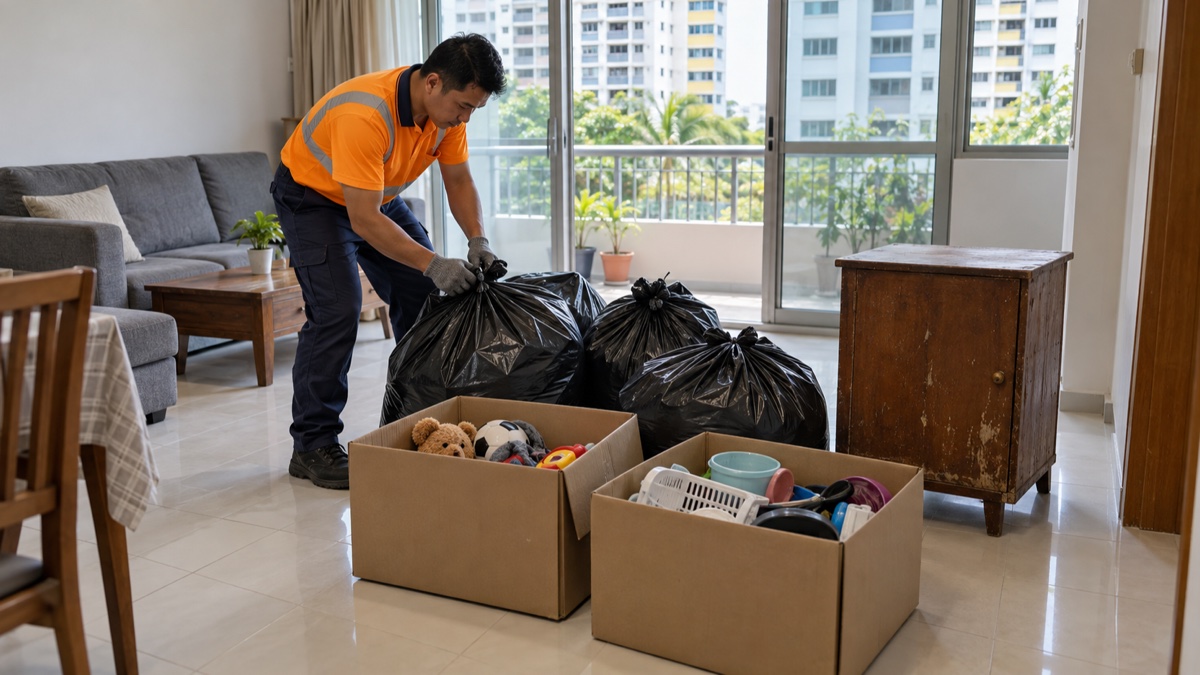
Once gifts, sales and donations have been collected, photograph the unwanted furniture and count the bags and boxes left behind. We collect ordinary bagged household junk as well as furniture. The household-junk guide explains what belongs in that load and which items need a separate route.
Send the photos on WhatsApp with the address, floor, lift access and preferred collection date. We give you a fixed, all-in quote for the agreed disposal work. Show any steps or awkward doorways. If the final list changes, send an update so the collection reflects your parents’ latest decisions.
Walk through the list together on the day. Keep anything still undecided out of the load, then check the cleared areas against the agreed inventory. Our house-clearance guide covers the wider collection sequence. If you are instead dealing with a home after someone has died, the separate estate-clearance guide addresses that situation.