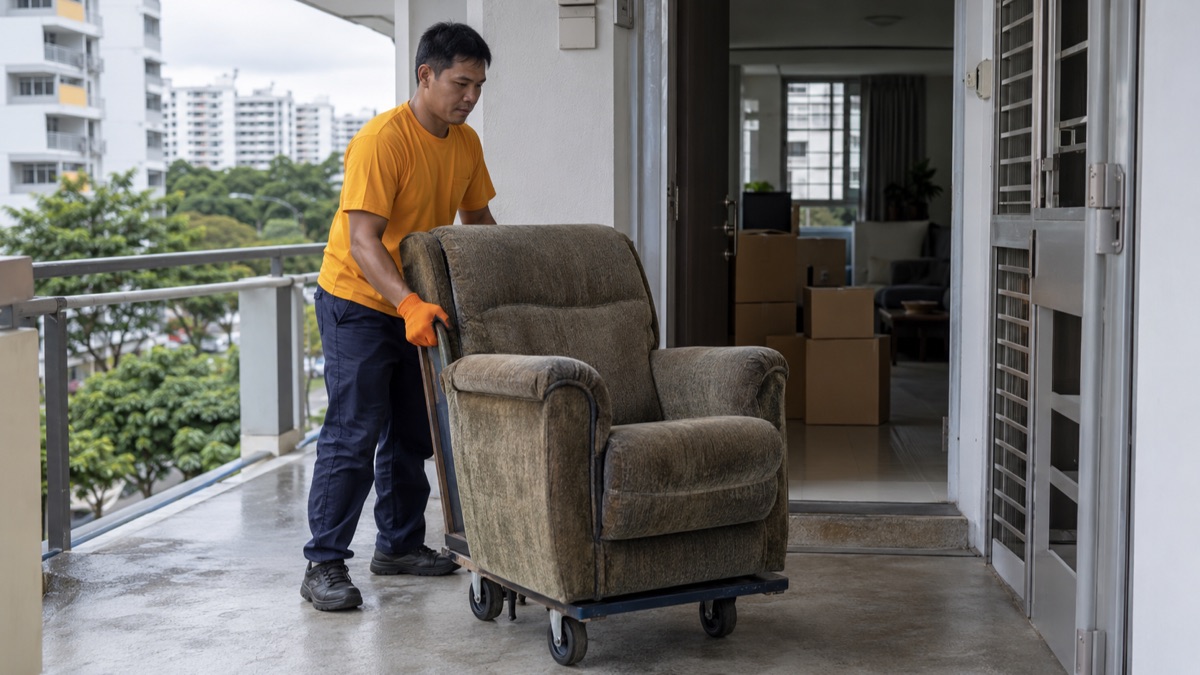
 Bulky Buddy

Decide what deserves space in your next home, then book disposal for the furniture you will leave behind. Where practical, have it collected before the movers arrive. Start selling or donating early, with a fallback date for anything that does not get collected.
Receiving BTO keys, having a home ready to live in and handing over your old place are three separate dates. Put each in the calendar. You want to clear unwanted furniture, not discover that you have disposed of the only bed you can sleep on this week.
Send photos of the items, your floor and the collection route for a fixed quote.
Get my price on WhatsAppWork backwards from the dates you can confirm
Start with access to the new home, the moving appointment and the old home's handover. Add renovation and furniture-delivery visits that affect where things can go. Resolve uncertain dates with the relevant person rather than building a collection booking around a guess.
For a resale purchase, HDB tells buyers to arrange a flat inspection before the resale completion appointment. Use that inspection and your agreed handover arrangements to establish what stays. A cabinet seen at the viewing is not automatically yours to dispose of.
Set your own decision deadline ahead of those appointments. This is a planning buffer, not an HDB requirement. If the move shifts, revisit the bed, fridge and anything else you still use. Early disposal should leave you with a workable final few days.
Living room: keep what fits the next room
Measure the space for the sofa, console and shelves, including doors and walking routes. Say your L-shaped sofa fits along the new wall but leaves no clear path to the balcony. Moving it first will not solve that problem.
Give each piece a destination in the new layout. “It can go somewhere” is how a spare cabinet earns another journey. Decide whether you want it while you can still arrange a sale, donation or disposal.
Empty storage stools and console drawers separately. Check for remotes, chargers and personal records. Photograph furniture for sale while it is assembled and accessible, with its condition and collection arrangements in the listing. That is easier than explaining a missing shelf at the lift lobby.
Bedrooms: do not pack a problem into the new flat
Review wardrobes, chests, mattresses and bed frames one by one. Empty under-bed storage too. A bed with six bags beneath it is a furniture decision and a sorting job; the photograph of the mattress only covers one of them.
Establish who owns each piece. Your landlord's wardrobe and your sibling's chest stay off the disposal list until the owner gives clear instructions. An unwanted item is not necessarily yours to release.
Plan the final night: bed, bedding and essential clothes. Use the bed-frame and wardrobe guides to brief the collector about furniture that is leaving. Keep dismantling in that plan instead of making it a family task between packing dinner plates and finding the keys.
Kitchen and study: separate furniture from electrical items
Empty freestanding kitchen storage into keep, reuse and disposal groups. Leave out what you need for the final days. You can sort a cabinet now without packing the kettle you still use every morning.
List appliances separately and use the fridge and washing-machine guide for their collection route. Furniture and electrical items need their own decisions, even when they share the same room.
In the study, check desk drawers and filing cabinets for papers and storage devices. Put them in a protected keep area. A laptop that no longer starts still needs a device-preparation decision and a suitable route through NEA's e-waste guidance. It does not belong in a miscellaneous rubbish box.
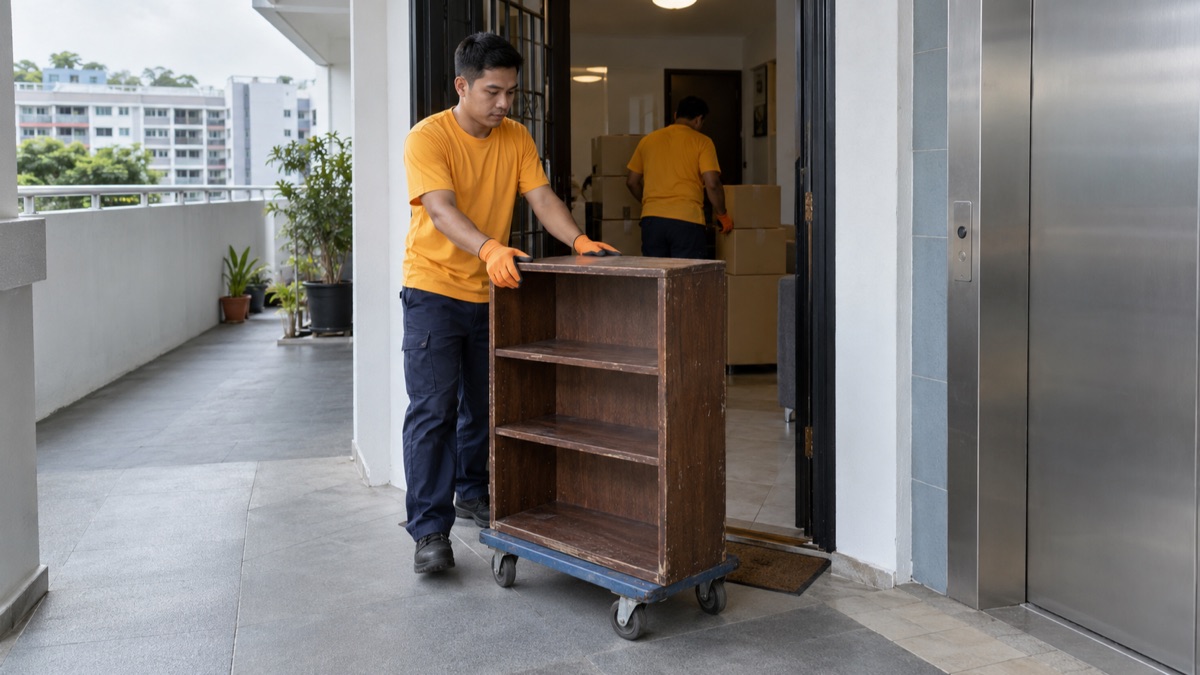
Storeroom and balcony: identify the awkward leftovers
Look behind the obvious moving boxes. Spare shelves, a dismantled desk, exercise equipment and a bicycle all need a destination. Include them in the disposal brief now; a hidden pile cannot be assessed from a living-room photo.
Group loose parts in the photos and explain what they belong to. “Desk top, two legs and fixings” gives the collector a clearer picture than “wood in storeroom”.
Move only light belongings you can handle comfortably. Photograph heavy pieces where they stand and describe blocked access or damage. Leave an unstable stack alone and get preparation instructions from the collector. You do not need to drag a heavy item downstairs to make an enquiry.
Sell or donate early, with a fallback date
Start with non-essential furniture. NEA lists donation, resale and repair channels; the recipient still needs to accept your particular piece. Interest in a listing is not a collection appointment.
Say a buyer promises Saturday pickup, stops replying on Friday and your movers arrive Monday. That cabinet is still your moving problem. Set a cutoff date while you have time to change the disposal brief.
Keep a fallback list and tell the collector which pieces are pending. If a sale falls through, send photos and an updated count for the revised scope and quote. Do not book for half the load while quietly keeping the other half as an on-the-day surprise.
Ready to arrange collection? Show us the agreed items and your preferred timing.
Get my price on WhatsAppKeep disposal and the move clearly separated
Give each crew its own list. The mover takes belongings to the new address; Bulky Buddy handles disposal, not household transport. Our removal versus disposal guide explains how to coordinate both.
Keep passports, keys, medicines and the overnight bag in a place neither crew is clearing. If you rent, check the landlord's item list and use the tenancy-clearance guide for handback planning. Schedule cleaning after removal, leaving access to finish it. Disposal does not automatically include cleaning, repairs or storage transport.
The final check before the movers arrive
Walk through the old home with this list:
- New home: only the furniture you chose is on the mover's list.
- Disposal: remaining items are clearly separate, and the mover knows they stay.
- Reuse: check what was actually collected, not just promised.
- Storage: open drawers, cupboards and under-bed spaces one last time.
- Final day: keys, documents, medicines and overnight belongings stay accessible.
If the schedule becomes urgent, send the remaining load and latest access time when enquiring about same-day collection. Wait for an accepted slot. For Bulky Buddy disposal, photos on WhatsApp are the starting point for a fixed all-in quote on the agreed job.