 Bulky Buddy
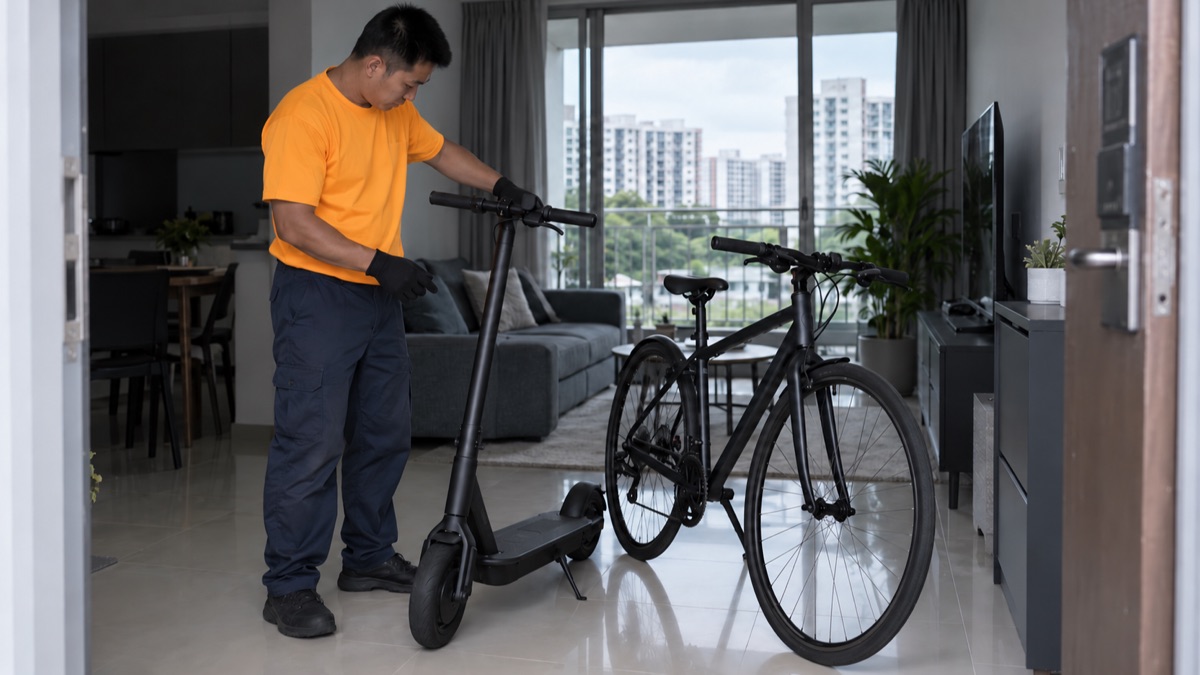
For PMD or e-scooter disposal in Singapore, choose a suitable e-waste route and disclose the device and battery condition. A conventional bicycle needs its own reuse or disposal decision. If a bike in a common area is not yours, report it instead of booking its removal.
Bulky Buddy accepts PMD, e-scooter and bicycle enquiries for assessment. Send photos, condition and access details. A swollen or damaged battery needs specialist handling advice; keep it out of an ordinary furniture load.
Send photos of the items, your floor and the collection route for a fixed quote.
Get my price on WhatsAppIdentify the device before choosing the route
Photograph the whole item and give the make or model where known. Identify a conventional pedal bicycle, power-assisted bicycle, e-scooter or other motorised PMD. State whether its battery is installed, already separate or missing. Leave the housing closed.
NEA's regulated-products list includes PMDs, power-assisted bicycles and electric mobility scooters. Describe the complete device to the operator, not just “scrap metal”. A loose battery needs its own acceptance check for its current condition.
Say an e-bike and a pedal bicycle share your storeroom rack. They need separate descriptions even if you want both gone. For a bicycle you own, repair, resale or an accepting recipient may come first. A previous resident's bike or a shared bicycle needs an ownership check; its location does not make it yours.
Use the current LTA rules for non-compliant e-scooters
LTA's current guidance states that keeping a non-UL2272-certified e-scooter is an offence from 1 June 2026. Old advice to stop riding it does not cover that rule. Use current disposal instructions rather than relying on a past campaign.
For a registered e-scooter, use LTA's e-scooter page for registration and deregistration steps. Take unclear records or device status to LTA. Physical collection does not automatically complete the administrative work.
If you inherit an old scooter with an unfamiliar sticker, send the details to LTA or the receiving operator. Do not guess its status from appearance or pass it to someone else on the assumption they can make it compliant. Establish the permitted route first.
Find an operator that accepts the actual device
LTA's rules page links current disposal guidance and lists e-waste recyclers for motorised active mobility devices. Contact an operator with the complete device, separate battery and damage details. Settle whether collection or drop-off is available and what preparation it needs.
ALBA's doorstep collection arrangements include electric mobility devices among its options. Check the eligibility and conditions for your actual load. A standalone scooter does not automatically qualify for free large-appliance collection, and a small battery bin is not a destination for a whole PMD.
Keep the accepted location, appointment and handover instructions. A recycler's listing alone does not establish that it accepts a damaged pack. If it cannot take your item, get the appropriate specialist route. Leave nothing beside a collection point or in a common-area pile while acceptance is unresolved.
Leave battery packs intact and disclose damage
The Consumer Product Safety Office's lithium-ion guidance warns against using or charging suspected damaged batteries and advises seeking help for abnormalities. If a pack looks swollen, damaged or abnormal, describe that to a suitable service provider. Do not charge it for a “still works” photo.
Do not puncture, crush or dismantle batteries; battery-maker safety guidance warns against those actions. Leave built-in packs and wires intact. If a battery is already loose, tell the specialist and follow instructions for that particular pack and condition.
Batteries stay out of general refuse and blue recycling bins. Keep a suspect pack out of an ordinary booking until you have suitable advice. If a device is hot, smoking or presents an immediate fire hazard, keep away and contact emergency services. Moving it for a disposal appointment is not the next step, and a general collection crew is not an emergency response or repair service.
For an ordinary bicycle, decide reuse before scrap
For your own bicycle, photograph the frame, wheels and accessories and describe the condition honestly. A bicycle that rolls is not necessarily ready to ride. Let a suitable repairer assess uncertain condition instead of promising a recipient that it is safe.
Settle who collects a reused bike, then remove accessories you are keeping. For example, you may be releasing the frame and wheels but keeping a child seat. Make that clear in the offer and have the kept accessory separate at handover.
For disposal, show the complete bicycle and any attached lock, rack or child seat. Explain ownership and access, including how an attached lock will be handled. A locked bike at the rack needs more preparation than “it's downstairs”. Keep personal belongings and retained accessories outside the agreed load.
Ready to arrange collection? Show us the agreed items and your preferred timing.
Get my price on WhatsAppAn apparently abandoned HDB bicycle is a reporting matter
If the bicycle is not yours, send its location and a photo to your town council for assessment. Leave its lock intact and do not take it home or book private removal. For a condo common area, contact management.
Say a dusty bike has occupied the same rack for months. That observation can go in the report; it does not give you authority to dispose of it. Follow the instructions for that report or notice, without borrowing another estate's tagging period or collection exercise.
If a notice concerns your own bicycle, contact the issuing council or building office about the required action. Keep that matter separate from booking disposal of a bike you clearly own.
Send a complete and safe collection enquiry
For a Bulky Buddy assessment, send this brief with your photos on WhatsApp:
- Device: full photo, type and known make or model.
- Battery: installed, separate or missing, with any visible damage or concerns.
- Condition: known modifications, loose parts and attached accessories, without opening the device.
- Ownership: confirmation that you can release the item and details of any lock.
- Access: floor, collection route and your preferred timing.
Get the accepted items, handling and receiving route in the scope. If furniture is leaving too, list the device separately in your household inventory. Resolve specialist battery concerns with an appropriate operator so the final booking describes a job the receiving team can accept.