 Bulky Buddy
The living room is only the start. A terrace house can have an upstairs wardrobe, boxes in the roof store, old chairs behind the kitchen and a garage shelf that has been collecting things since the last move. Landed house clearance in Singapore needs a plan for all of it, including the journey down.
We remove unwanted furniture and bagged household clutter from terraces, semi-detached houses and bungalows. Send photos on WhatsApp, grouped by floor and outdoor area, plus the access route. We give you a fixed, all-in quote for the agreed clearance. We dispose of what you no longer want; arrange the move for your retained belongings separately.
Send a room-by-room set of photos, including the stairs and gate. We’ll quote for the full clearance.
Get my price on WhatsAppCount by floor, then go outside
Walk through the house with your phone and make a simple list. Give each space a name: ground-floor living room, upstairs front bedroom, attic store, rear yard, garage. Photograph each collection area from the doorway, then take close-ups of large or awkward pieces.
The point is to capture the full volume. “One house” is not an inventory: a bungalow with two empty bedrooms and a terrace packed across several levels are different jobs. The car porch is especially easy to forget because the things there don’t feel like indoor furniture. They still need room on the collection vehicle.
- Living areas: sofas, dining furniture, sideboards, loose cabinets and boxed clutter.
- Bedrooms: beds, mattresses, desks and unwanted free-standing storage.
- Upper stores: cartons, suitcases and furniture tucked behind other things.
- Outdoor areas: loose chairs, tables and empty movable shelving you want assessed for removal.
For the broader process of sorting and scheduling a whole home, our house-clearance guide is the starting point. This guide concentrates on the parts of a landed job that room photos alone won’t show.
The staircase is part of the job
If there is no lift, tell us which floor each large item is on. Photograph the staircase from the bottom and top, plus every turn and landing. A straight flight and a tight turn beside a low ceiling need different handling plans. Include the doorway out of the room, not just the stairs.
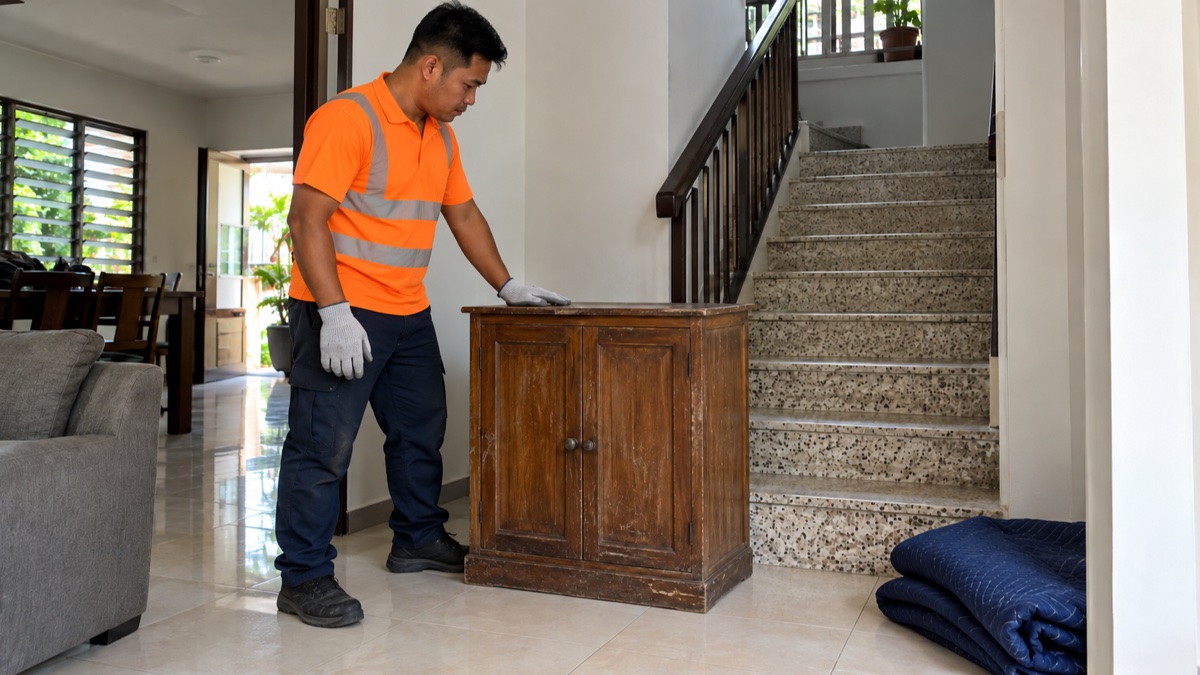
Picture a tall cabinet in a Serangoon Gardens terrace: it may stand happily upstairs while its route out bends twice. Send its height, width and depth with a photo showing the whole piece. We can assess whether dismantling needs to be included in the quote. Don’t start breaking it apart to see whether it fits.
If the house has a lift, give us the usable opening and cabin measurements rather than assuming everything can use it. Furniture that does not fit still needs another route. A lift is useful information; it is not a substitute for showing the staircase.
Give attic and store-room access its own photos
A small roof store can hold a surprising number of cartons. Show the entrance, any low ceiling and the way you reach it. A normal stair, a steep narrow stair and a ladder-only opening are not interchangeable. Describe the actual access and let us assess it.
Do the inventory from a safe position. Don’t drag a heavy chest down an attic ladder for the sake of a better photograph. If objects are hidden behind a row of boxes, explain that the first count is provisional and send an updated set once you can see them.
In a semi-D with a store tucked behind the kitchen, photograph the narrow back passage too. The final few metres can matter as much as the main staircase. Move everyday belongings out of that passage, leaving the unwanted heavy items where they are for assessment.
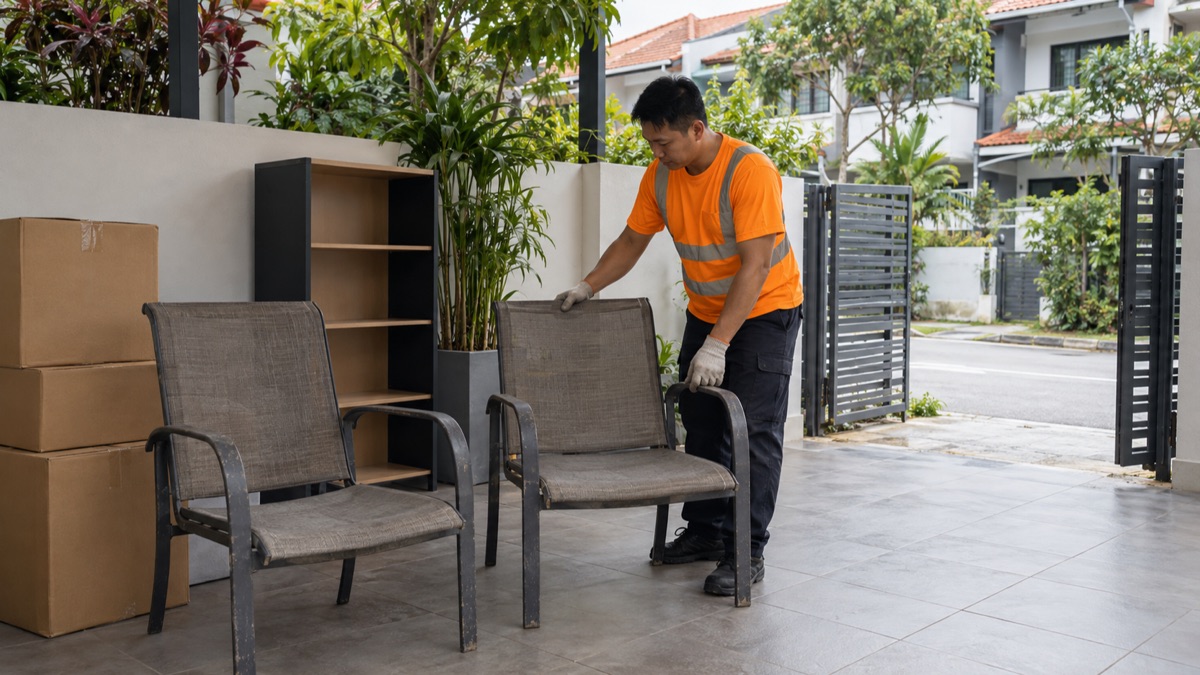
Garden and garage: name the items, not just the area
“Clear the garden” could mean an old patio set or digging out beds and removing soil. Our household-clearance brief should list loose items: two outdoor chairs, one table, an empty rack, boxes of household clutter. Show their condition, size and location. Separate gardening or building work from the furniture-removal request.
A garage can also hide excluded items. Keep paint, chemicals, LPG cylinders and loose batteries out of the household load. Our household-junk guide sets out the appropriate supplier, manufacturer and NEA routes for those items. We do not take renovation debris; use your renovation contractor for that work.
Empty cupboards and shelves so you know what is inside. Photograph any bulky object whose material or weight is unclear rather than calling it “one small thing”. A compact stone-topped piece deserves its own photo. Size and carrying difficulty do not always travel together.
Plan the gate, driveway and loading approach
Send a view from the gate towards the house, then a view of the frontage. Include entrance steps, slopes, a narrow side passage and the space a crew would use to carry items out. If cars normally fill the driveway, arrange a clear working route for the booked slot.
For a terrace along a narrow street, tell us whether the frontage is shared closely with neighbours’ entrances. Give nearby neighbours a practical heads-up about the collection window and keep their driveways usable. We need a workable loading arrangement; an empty stretch of road in a photo is not permission to park there.
This is not a promise that a lorry can enter your property. Vehicle access and the loading point need to be planned from the actual site. Keep items inside your boundary while waiting. Moving everything onto the roadside the night before only creates another problem to solve.
Keep the household running while you sort
If people still live in the house, clear one area at a time. Keep beds, daily seating and a clear route to the kitchen available until they are no longer needed. Store retained belongings away from the collection zones, with simple labels everyone can follow.
Give reusable furniture a separate route. NEA lists donation, resale and repair channels for items in suitable condition. Our old-furniture guide helps you weigh those options. Set a collection deadline for recipients so the remaining clearance list can settle.
Say a family member wants the dining table from your East Coast bungalow. Put their name and collection date on the plan. “My cousin might take it” is a possibility, not a completed handover. Keep it off the disposal list until the owner makes the final decision.
Attic, garage and back garden included? Show us the complete load for a fixed, all-in quote.
Get my price on WhatsAppBuild one brief, then check the rooms on the day
Send the floor-by-floor inventory, total bag and box count, stairs, gate, loading approach and preferred date in one message thread. Point out dismantling needs and anything you cannot assess from the ground. We use that to define the work and give a fixed, all-in quote. Update the brief if another store room joins the job.
On collection day, have one person show the crew exactly what is going. Walk the rooms again afterwards: check behind doors, inside emptied cupboards and in the rear yard against your list. Collection is not automatically cleaning, repair or reinstatement; keep those tasks on their own schedule.
For an HDB flat, use the town-council collection directory to explore local bulky-item options. For a condo, use the management and service-lift checklist. A landed job starts with your own floors, access and full load.