 Bulky Buddy
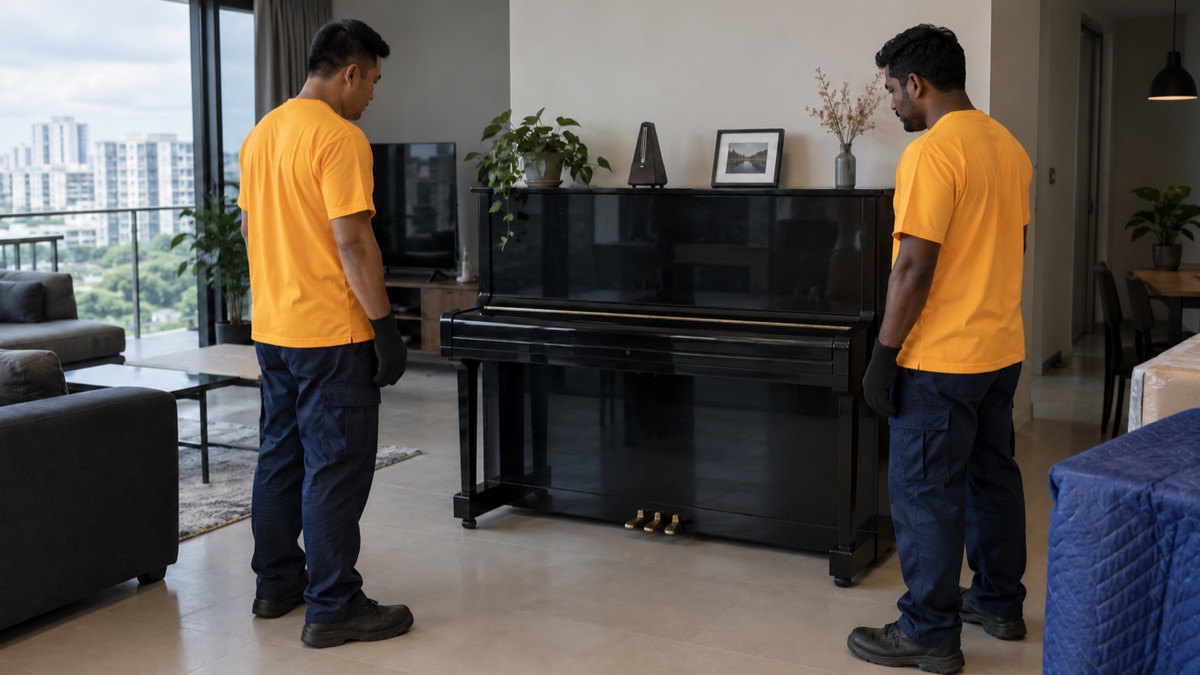
Piano disposal starts with an assessment of the instrument, its weight and the full route out. Check for a buyer or recipient first. If the piano is being disposed of, send photos showing its type, floor, lift access and any stairs.
Bulky Buddy accepts piano disposal enquiries for assessment. We do not move a kept piano to another home. Include the bench and any loose items you want removed, so the enquiry describes the whole job.
Send photos of the items, your floor and the collection route for a fixed quote.
Get my price on WhatsAppFirst decide whether it still has a musical home
If the piano may be usable, a piano technician or dealer can assess it. Age alone does not tell you its playing condition or whether someone wants it. Gather the make, model, known purchase history and recent servicing details. Photograph accessible identifying information without opening unfamiliar components.
Say the upright in your spare room has not been played for years. Describe that honestly, along with any known damage. “Suitable for lessons” needs more basis than a row of keys and your hope that someone will collect it.
A sale or donation needs a recipient and a specialist transport plan. Settle who books the transport and whether the destination can accommodate the instrument. If handover is approaching, set a decision date. Keep disposal as a separate enquiry until reuse is resolved; an interested message is not a piano on its way to a new home.
Identify upright, grand or digital before asking for a quote
Show the full instrument where it stands. An upright's tall case and a grand's projecting body need different route assessments. If you do not know the type, send a clear photo. Include the bench, detachable music stand or other loose pieces only when they belong in the collection.
A digital piano in a furniture-style cabinet needs to be identified as an electrical device. Its receiving route needs checking separately from an acoustic upright or grand. Keep it intact and send the model; a piano-shaped case does not settle the category.
For an acoustic instrument, use its own model information. Yamaha's U Series specifications list dimensions and weight by upright model. Another model's figure cannot establish that your piano suits a particular lift or staircase.
Treat weight and access as a specialist assessment
A piano is not an empty cabinet with keys. Send the details the collector needs to plan equipment and handling. Leave it in place: rocking it, testing its castors or getting friends to lift one end will not produce a useful assessment.
For a lift route, get the relevant lift details from the building contact and provide the piano's model information where available. The assessment includes the instrument, handling equipment and people. Fitting through the door answers only one part of it.
For example, a piano may face a clear doorway but a tight turn immediately outside your flat. Show both. For stairs, photograph the flight and landings safely and locate them along the route to the vehicle. “Upright piano” alone cannot establish a crew size or a promise that stairs are workable.

Send a photo packet of the whole route
Start beside the piano and work towards the vehicle. Wide photos connect the spaces; closer views show turns, thresholds and uncertain gaps. Include furniture that will remain beside the route so the plan reflects the room the crew will actually enter.
Use this photo checklist:
- Instrument: front and side views, type, make and model where known, plus visible damage.
- Room exit: the doorway, turning space and nearby furniture that stays.
- Lift or stairs: floor, lift access, steps and landings, with unconfirmed building details marked.
- Vehicle route: the permitted loading point and the path from the lift or entrance.
- Collection: piano disposal, any bench or loose pieces, and your preferred window.
You do not need to move the piano to photograph its hidden side. Say that it is inaccessible and let the provider arrange any closer assessment. Old delivery information can help, but the route still needs a current check.
Say a cabinet now occupies the corner where the piano turned during delivery. Include it in the photos. “It came in this way” describes an earlier room, not necessarily the one being cleared today.
Agree floor and lift protection before the visit
Get the team's protection plan for flooring, thresholds, walls and the lift, alongside any building requirements. Photograph surfaces and corners you are concerned about. Our management and service-lift checklist helps with condo arrangements; a normal residential lift booking does not automatically settle a piano job.
Clear light belongings from the agreed route. Shoes by the doorway and boxes beside the lift can be moved without touching the instrument. Keep children and pets away from the working area.
Leave the piano stable where it stands. Do not remove legs, pedals, panels or internal parts to make a grand smaller. The handling team should specify any preparation as part of the job, including work it will undertake itself.
Ready to arrange collection? Show us the agreed items and your preferred timing.
Get my price on WhatsAppCheck exactly what the disposal quote covers
The written scope should name the instrument and route, preparation, carrying, protection, loose items and appointment window. Resolve uncertain stairs or lift access through an assessment before treating the quote and booking as final.
Our cost-factors guide explains how to supply a complete brief. A generic rate cannot describe an instrument and route the collector has not assessed. With Bulky Buddy, send the photos on WhatsApp so we can assess the job and give a fixed all-in quote for the agreed work.
If management changes the loading point or the lift becomes unavailable, update the collector. Furniture newly blocking a turn also changes the plan. If the crew finds a different route on arrival, pause and settle it before moving the piano. Do not test a heavy instrument against an unassessed obstacle.
Release the agreed instrument, then check the space
Walk through the disposal list and point out nearby items that stay. Check the bench and storage compartments for personal belongings. Music books kept inside the bench need their own keep-or-release decision, even when everyone agrees that the piano is going.
After removal, compare the job with the accepted list and inspect the agreed route with the team while someone is there to discuss it. If the piano is part of a larger clear-out, keep it separate in the house-clearance plan. Start with the instrument and route photos; the assessment and agreed scope follow from those.