 Bulky Buddy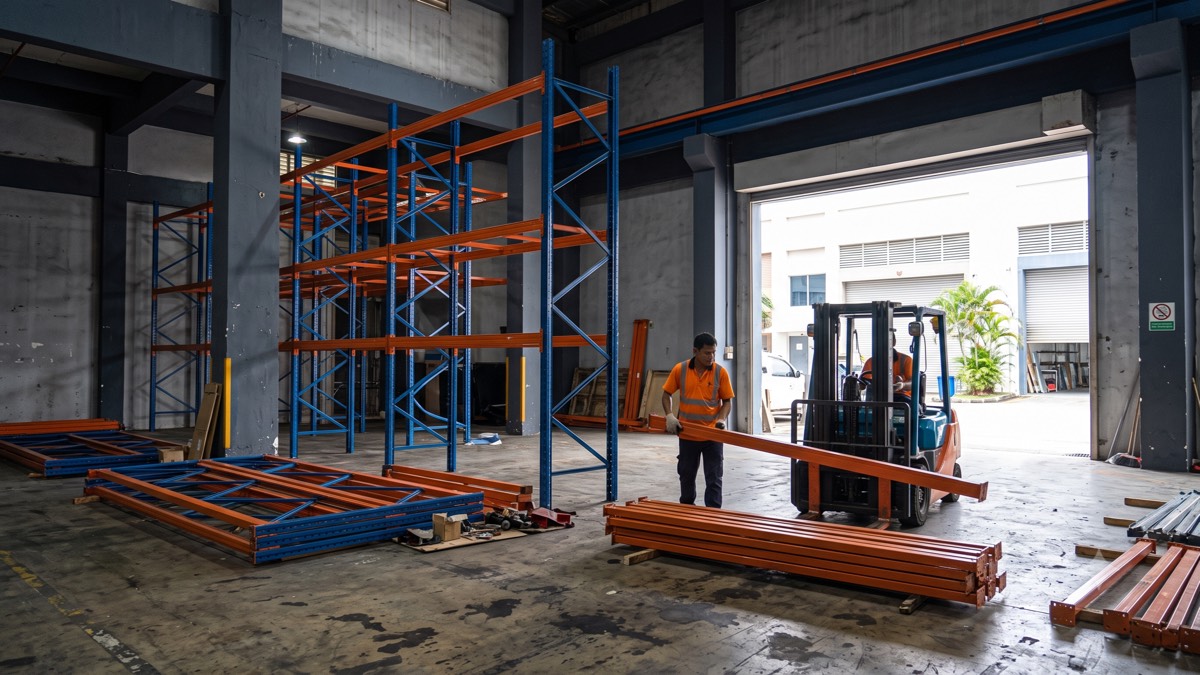
A warehouse clearance is a different scale of job from an office or a shop. You're not measuring in desks and chairs — you're measuring in pallet bays, racking runs and floor area, often across a facility in Tuas, Jurong, Senoko or one of the logistics parks near Changi, where the volume alone changes how the job has to be planned. And unlike a self-contained office unit, a warehouse is frequently still operating in part while you're trying to clear another part of it.
This guide covers what typically comes out of a warehouse clearance, how pallet racking actually gets taken down, the factors that decide the price on a bulk-volume job, and how clearance gets scheduled without shutting down the rest of your operation.
Whether you're consolidating two sites into one, closing a lease on an underused unit, or clearing out a section after a stocktake write-off, the practical questions are the same: how much racking has to come down, how much floor area needs to be emptied, and how much of the rest of the facility has to keep running while it happens.
Clearing a warehouse or storage facility? Send photos and floor details for a fixed quote.
Get a warehouse quoteWhat we clear from warehouses
Warehouse jobs usually involve some mix of:
- Pallet racking and shelving — selective racking, drive-in systems, or standalone industrial shelving
- Bulk furniture and equipment — packing benches, sorting tables, old workstations in admin areas
- Damaged or obsolete pallets and packing material built up over time
- Old stock and inventory being written off — decide disposal versus liquidation before clearance day, same as a retail closure
- Signage, safety barriers and fittings that are no longer in use
- General industrial waste from years of operations
Heavy plant and machinery sits in a different category — more on that below, since it isn't a blanket yes or no. And as with an office e-waste pile, if there's IT equipment or electronics mixed into a warehouse admin area, that needs to go through the same licensed e-waste channels as anywhere else — warehouse volume doesn't change what's legally required for that stream.
Racking: dismantle, lower, remove
Pallet racking isn't furniture — it's a structural system, usually taller than head height and rated to carry serious loads, so taking it down safely follows a set order rather than just unbolting whatever's easiest to reach. Beams come down first, section by section, then the upright frames get lowered and separated. On taller runs this means working methodically rather than quickly, because a racking frame coming down wrong is a genuine safety hazard, not just an inconvenience.
Not all racking is scrap. Frames and beams in decent condition sometimes have resale value to another warehouse operator, and separating what's reusable from what's headed for metal recycling is worth doing rather than treating the whole run as waste by default.
The other thing that matters is what's still on the racking. Cleared shelving is a straightforward dismantle; racking that's still loaded with pallets, stock or equipment needs that emptied first, which changes both the sequence of the job and how much manpower it needs. Let us know upfront whether the racking is already empty or still in use — it's one of the biggest swing factors in how long a dismantle actually takes.
Insider tip: tell us the racking height and number of bays upfront, not just "we have some racking to clear." A 3-metre run of selective racking and a 6-metre drive-in system are very different jobs — the height changes both the safety approach and the manpower needed.
Bulk volume: how big jobs get priced (factors)
Same principle as any clearance — no flat rate, priced on what's actually involved:
| Factor | Why it matters |
|---|---|
| Volume | Floor area and pallet positions — this is the biggest driver on a warehouse job |
| Racking dismantling | Height, number of bays and racking type all change the labour required |
| Site access | Dock levellers, forklift availability, and how far material has to travel to the loading point |
| Scheduling | Working around live operations usually means a phased, zone-by-zone job rather than one clean sweep |
| Special handling | Mezzanine access, heavy plant, or anything needing case-by-case assessment |
Photos of the space, a rough sense of racking length and height, and whether the site is fully or partially operational gets you most of the way to an accurate fixed quote.
Scheduling around live operations
Very few warehouse clearances get the luxury of an empty building — usually part of the facility is still receiving stock, running shifts, or in active use while another section gets cleared. That means the job is planned zone by zone: we clear one area while operations continue elsewhere, coordinate timing around your shift patterns and forklift traffic, and stay out of the way of anything still live. Some sites also require a safety induction or permit-to-work before an external crew can start — if yours does, let us know ahead of time and we'll complete whatever's needed before turning up, rather than losing the first hour on site to paperwork.
This matters more in a shared or multi-tenant industrial building than a single-occupier site — loading bays and internal roads are often shared, so timing a clearance around other tenants' delivery windows avoids the job becoming someone else's bottleneck as well as yours. Tell us if the building has shared access and we'll plan the schedule with that in mind.
Part of the warehouse still operating? Tell us which zones need clearing and we'll work around the rest.
Get a warehouse quoteSend us photos of the space, roughly how much racking is involved and at what height, whether there's a mezzanine, and how much of the site needs to stay operational during the job. We'll come back with a fixed quote and a phased plan that fits around what's still running.