 Bulky Buddy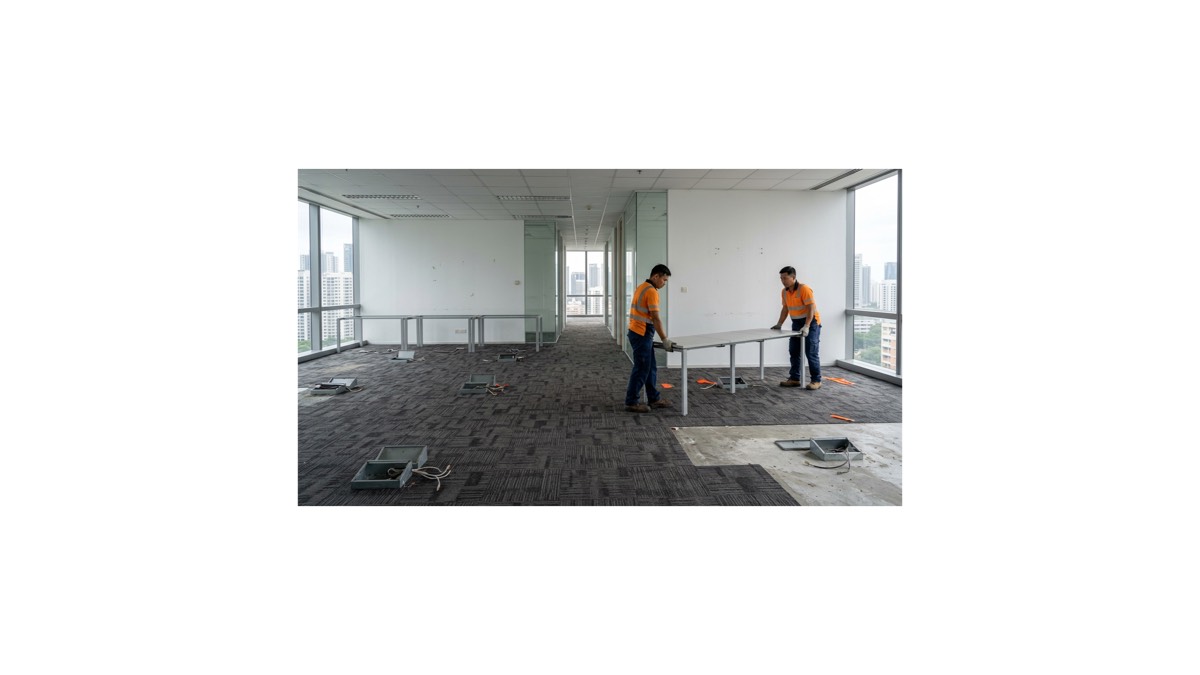
"Reinstatement" is the word that turns a straightforward office move into a project with a legal deadline attached. It's the clause in most commercial leases requiring you to hand the unit back in the condition your landlord specified — often close to bare shell — and it means more than just carrying the desks out. Furniture goes, but so do the partitions you built, the extra points you wired in, and anything else that wasn't there when you signed the lease.
If your lease is ending and reinstatement is looming, here's what actually has to happen, in what order, and where a clearance crew's job ends and your reinstatement contractor's begins.
This isn't unique to any one building type — it applies whether you're a startup in a co-working-style flexible space with a lighter clause, an SME in a Grade A tower with a strict facilities team, or a small operation in a business park unit where the landlord is more relaxed but still wants the keys back to a bare shell. The clause language differs; the underlying job — empty the unit, undo what you added, hand it back — is the same.
Handover date on the calendar? Send photos of the unit and we'll quote around it.
Get a reinstatement quoteWhat "reinstatement" actually requires
Read your tenancy agreement's reinstatement clause carefully — it's more specific than "clean it up." Most require the unit returned to its original handover condition, which typically means: all furniture and fittings removed, any partitions or built structures you added torn out, cabling and IT points made good, walls patched and repainted if you painted or drilled into them, and the floor covering restored or removed depending on what was originally there. Some leases specify professional cleaning on top of that. It's worth getting your exact clause in writing from your property manager or agent before you plan the job — "reinstatement" means different things in different leases, and guessing wrong is an expensive way to find out.
Work backwards from your handover date
The handover date is fixed. Everything else has to work backwards from it:
- Handover / walkthrough date — the date your landlord inspects and (hopefully) accepts the unit back.
- Reinstatement works finish — hacking, patching, repainting and any make-good work needs to be done and dry before the walkthrough.
- Furniture & fittings clearance — the unit needs to be empty before reinstatement works can start, so this comes before the contractor, not after.
- Building bookings — service lift, loading bay and any MCST paperwork, arranged with enough lead time that a fully-booked slot doesn't blow the whole schedule.
Book the clearance early enough that your reinstatement contractor has room to work and you still have slack before the walkthrough. A clearance that happens the day before handover leaves zero room for a lift booking to fall through or a contractor to run late.
Work out your timeline the same way you'd plan any deadline-driven job: start from the walkthrough date and count backwards, not forwards from today. If your contractor needs a stretch of days to hack out partitions, patch and let paint dry, that block has to sit fully before the walkthrough — which means your furniture clearance has to sit fully before that. Skipping straight to "let's clear it next week" without mapping the contractor's finish date first is the single most common reason reinstatement jobs run into the wire.
Insider tip: confirm with your landlord or agent exactly what "original condition" means for your unit before you plan the works — some leases only want furniture and additions out, others want the unit stripped to bare concrete. That distinction changes your contractor's scope, not just your clearance.
What the landlord's walkthrough checks
A typical end-of-lease walkthrough looks at: whether all furniture and fittings are gone, whether added partitions and cabling have been removed, condition of the floor covering, marks or holes on the walls and ceiling from mounted fixtures, whether lighting and aircon points match the original layout, and general cleanliness. Landlords vary in strictness — some do a quick visual check, others go through with a checklist against the original handover photos. Either way, a unit that's been cleared but not reinstated (furniture gone, but partitions and cable runs still in) is the most common reason a walkthrough gets kicked back for rework.
Small things trip up walkthroughs more often than big ones. Cable trunking left stuck to skirting, screw holes from a mounted TV or whiteboard, carpet tile stains under where a server rack sat, a reception counter that was screwed to the floor — these are exactly the items that get missed when "clearance" is treated as just "get the furniture out." Walking the unit yourself against the original handover photos, if you still have them, catches most of this before the landlord does.
Furniture & fittings out: what a clearance crew handles vs your contractor
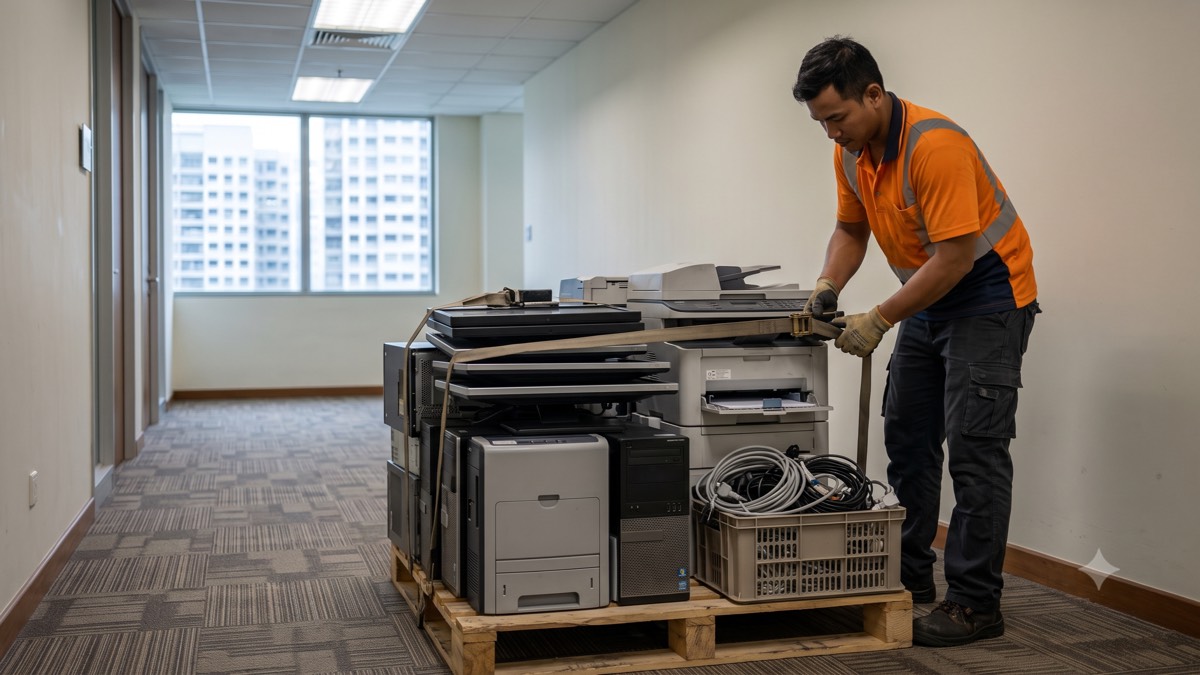
These two jobs get confused constantly, and mixing them up wastes time. A clearance crew handles: desks, chairs, cabinets, workstations and partitions that are freestanding or bolted but not structural, IT and server equipment, general rubbish and packing material, and loose fittings like whiteboards and reception counters. A reinstatement contractor handles: hacking out built structures, patching and repainting walls, restoring or replacing floor coverings, electrical and cabling make-good, and any works that need a licensed tradesperson.
The clean way to run it: clearance crew empties the unit first, contractor does the hacking and finishing work, then if there's construction debris or leftover rubbish afterwards, a short final clearance closes it out before your walkthrough. We can coordinate directly with your contractor's timeline so neither job is waiting on the other.
Working with a reinstatement contractor already? We'll slot around their schedule.
Get a reinstatement quoteSend us your handover date, roughly what's in the unit, and whether a contractor is doing the hacking and painting work — we'll give you a fixed quote for the clearance and a slot that leaves your contractor room to finish before the walkthrough.