 Bulky Buddy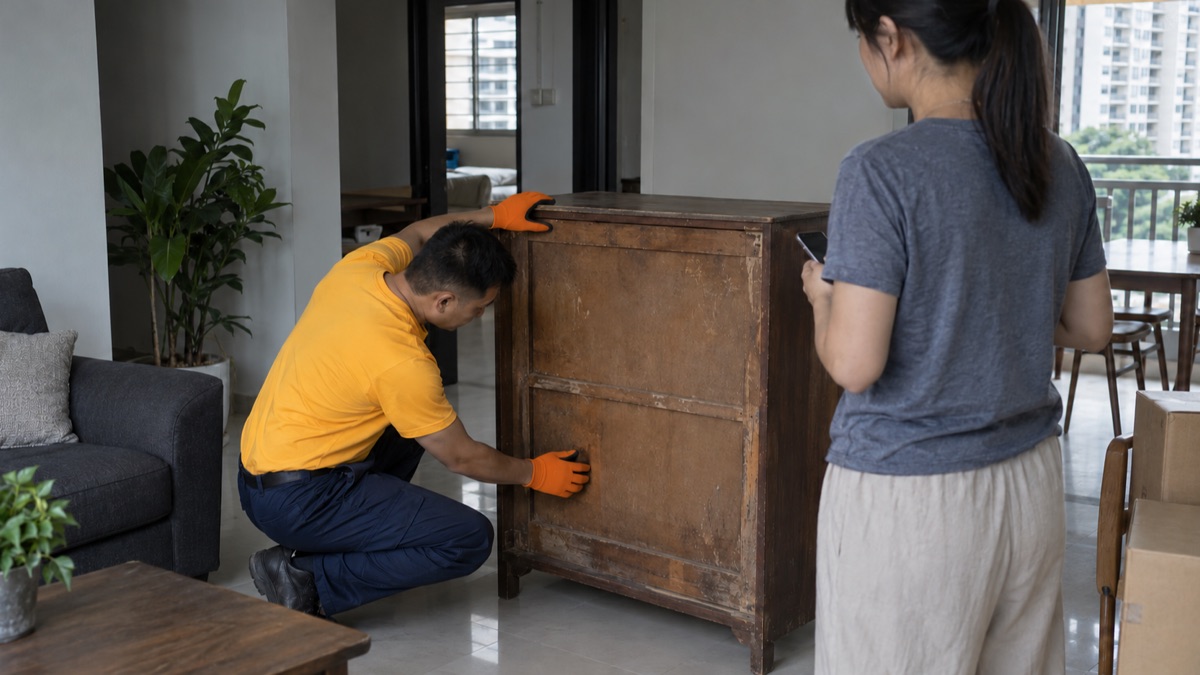
Choose a disposal company by checking who will collect your items, what the written quote covers and where the items will go. Send the same photos and access details to each provider. Then compare the actual jobs they have quoted for.
Say you have an L-shaped sofa, a mirrored wardrobe and a fridge to clear from a 12th-floor flat. A reply that says “three items, collection Saturday” leaves quite a lot unsaid. Who dismantles the wardrobe? Does the fridge need a separate route? Start there.
Send photos of the items, your floor and the collection route for a fixed quote.
Get my price on WhatsAppIdentify the collector behind the booking
Get the name of the company doing the collection and a contact you can reach on the day. If the booking name and collection company differ, find out who is responsible for the job. A chat profile is useful for messaging; it is not much of an answer when the wrong crew arrives.
NEA licenses general waste collectors by waste class. Class A includes unwanted furniture and bulky waste. Read the NEA waste collection guidance and match the collector's legal entity against the published list of general waste collectors.
“Registered”, “insured” and “experienced” describe different things. None replaces the licence check, and a licence does not tell you whether dismantling is included. Check the collector's identity once, then turn to the work you are buying.
Give each provider an identical brief
Use one set of photos and one item list for every quote. Include quantities, floor, lift access and your deadline. Open the wardrobe doors for a photo, show the glass tabletop and include detached panels leaning behind the sofa. They are still part of the load.
For example, “one wardrobe” could mean an empty freestanding cabinet or a mirrored unit with shelves still full. The words are the same; the job is not. Wide photos show the whole item. Close-ups explain the awkward bits.
If you later add four dining chairs, send that update to everyone still quoting. Otherwise you may choose a lower total simply because that provider has seen a smaller job. Keep the brief in one message so nobody has to piece it together from a week of chat.
Read the scope before the total
A useful quote names the items, starting location, access route and collection window. It also says what is included, what is excluded and how payment works. “Disposal included” alone does not tell you who carries the cabinet out of your bedroom.
Use this checklist when comparing replies:
- Carrying: from inside your unit or from an agreed collection point?
- Dismantling: who takes apart the furniture, and are the loose parts included?
- Access: does the quote reflect stairs, lift access and the route to the vehicle?
- Full load: are the stool, spare panels and extra chairs on the list?
- Changes: what happens if an item changes or the lift slot falls through?
- Payment: when is it due, who receives it and what record will you get?
Save the final version. You want one clear record to show the crew, not an archaeological dig through screenshots while someone holds the lift.
Check access planning before accepting a slot
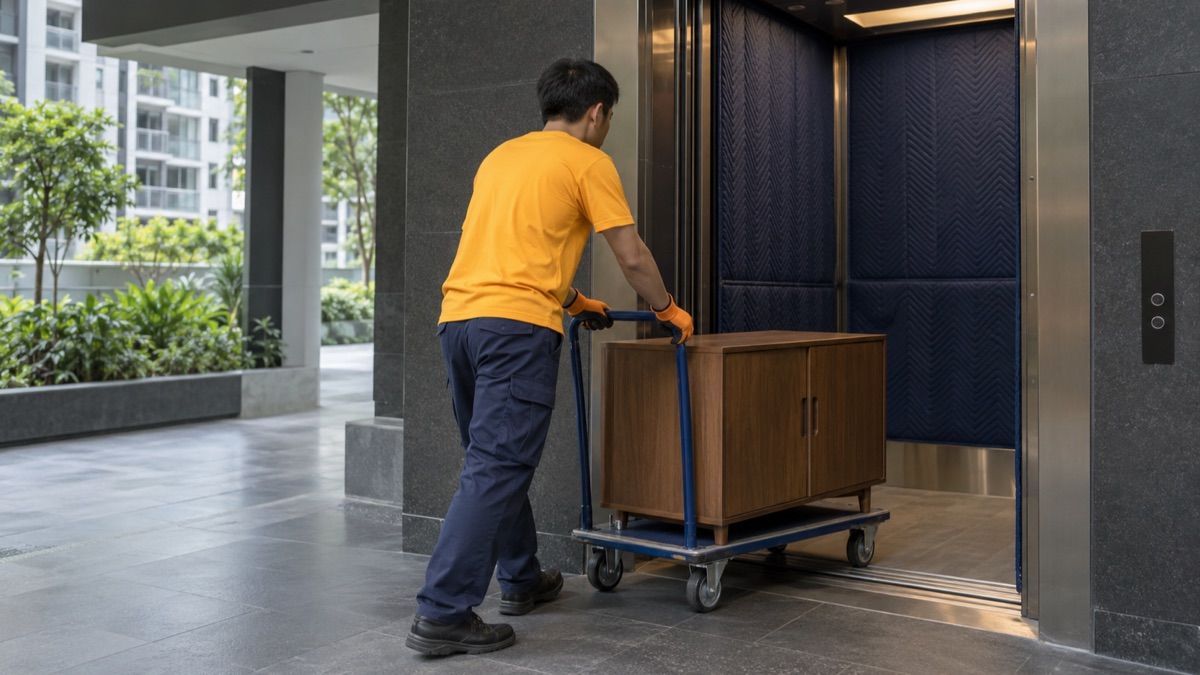
A collection time needs to work for both the crew and the building. For a condo, get your management's arrangements for lift bookings, work hours and loading access. Our condo disposal guide walks through the details; your building's rules decide what applies.
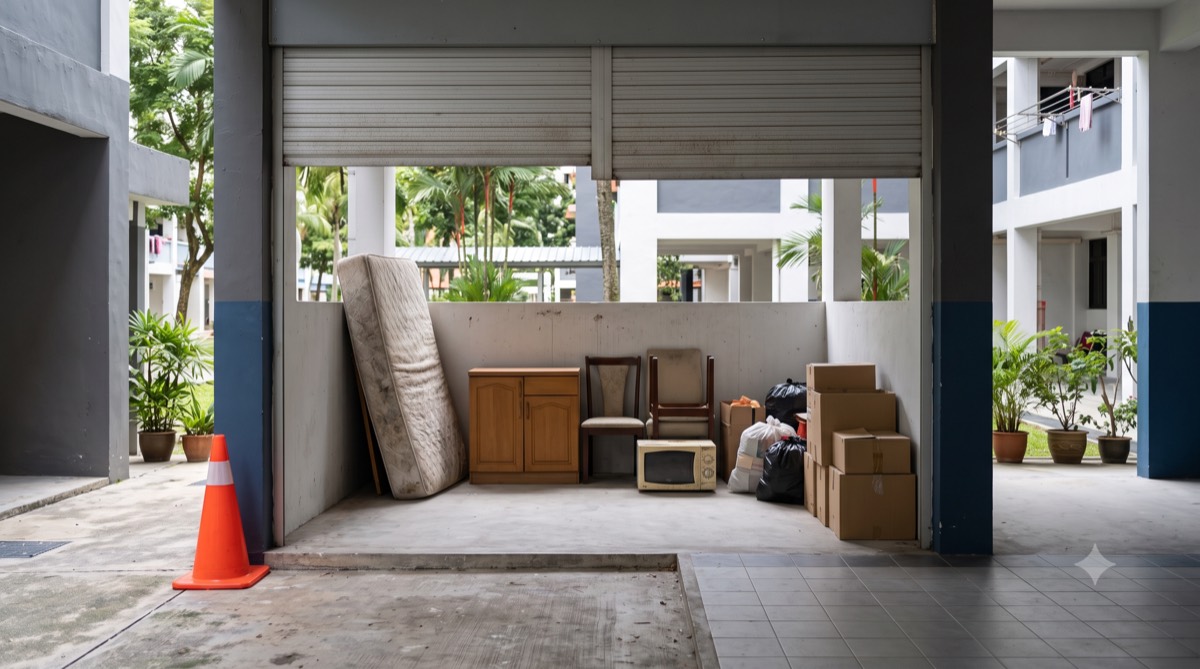
For an HDB collection, a town council service may be another route. Check your own council's item limits and booking process rather than assuming a neighbour's arrangement applies to your flat.
Picture the wardrobe leaving the bedroom, turning into the corridor and reaching the lift. Photograph the narrow turn or steps along that route. Do not attempt a heavy test carry to prove it fits. The collector needs the route information to plan the job.
Ask a separate question about electrical items
A television beside a sofa is not automatically covered by the sofa's disposal route. List TVs, computers and appliances separately, with the device type and quantity. Get an answer for those devices, not a general promise to “recycle everything”.
Use NEA's e-waste guidance to check suitable channels and what they accept. If a proposed collection leaves the electronics out, you can arrange the right route while there is still time.
Clearing an office with old laptops? Keep data handling separate too. Furniture collection is not certified data destruction. Our office e-waste guide covers that distinction, including when you need a specialist service and records.
Recognise unanswered questions, not just bad advertising
The useful warning signs are practical: nobody will name the collector, the scope stays vague, or you are told the price will be settled after loading. Get those gaps resolved while your furniture is still in your home.
If the answer is “we'll dump it”, ask where. You need a clear account of the receiving route. A green logo is not proof that every item will be reused, and a reuse promise needs more detail than “someone will want it”.
Cash alone does not prove a service is unreliable. Cash-only payment combined with no written scope, no payment record and no accountable contact is a different proposition. Judge the whole arrangement, not one payment method or a polished advertisement.
Ready to arrange collection? Show us the agreed items and your preferred timing.
Get my price on WhatsAppMake collection day a confirmation, not a negotiation
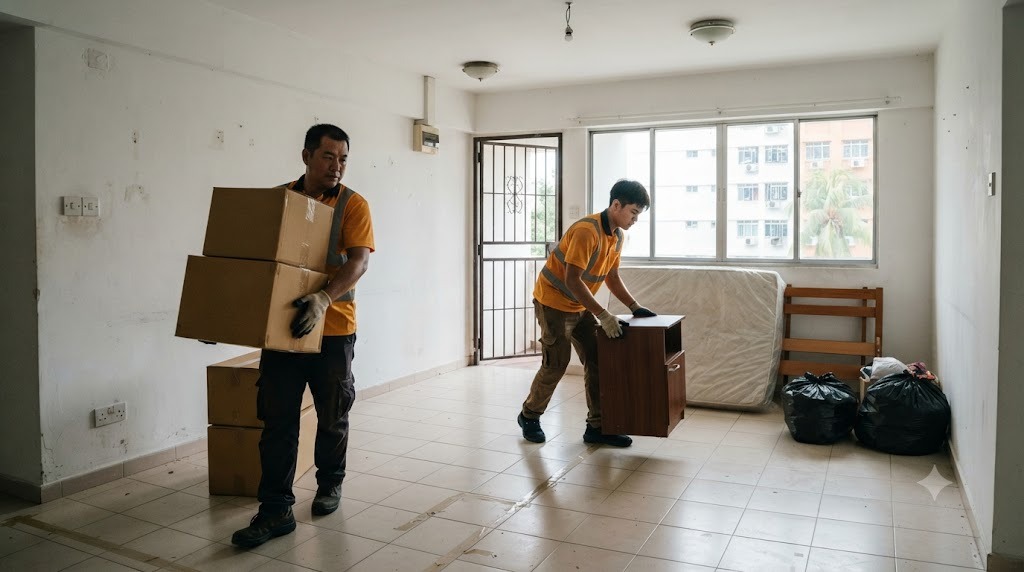
Walk through the agreed items with the crew. Point out anything that stays, especially lookalike chairs or matching bedside tables. If the list or route differs from the quote, settle the change in writing before loading begins. Leave any unapproved items where they are.
Say your brother has collected the desk but you now want a bookcase removed. That is a changed job, even if the item count is still one. Send the replacement photo instead of hoping the crew will treat them as interchangeable.
After collection, check the list against what left, including shelves and loose panels, and keep the payment record. For several rooms, our house clearance guide helps you organise the wider clear-out.
With Bulky Buddy, send us photos on WhatsApp with quantities, access details and your timing. We use that brief to give you a fixed all-in quote for the agreed work. Clear photos make a much better starting point than “a few things”.